A watering can for indoor plants
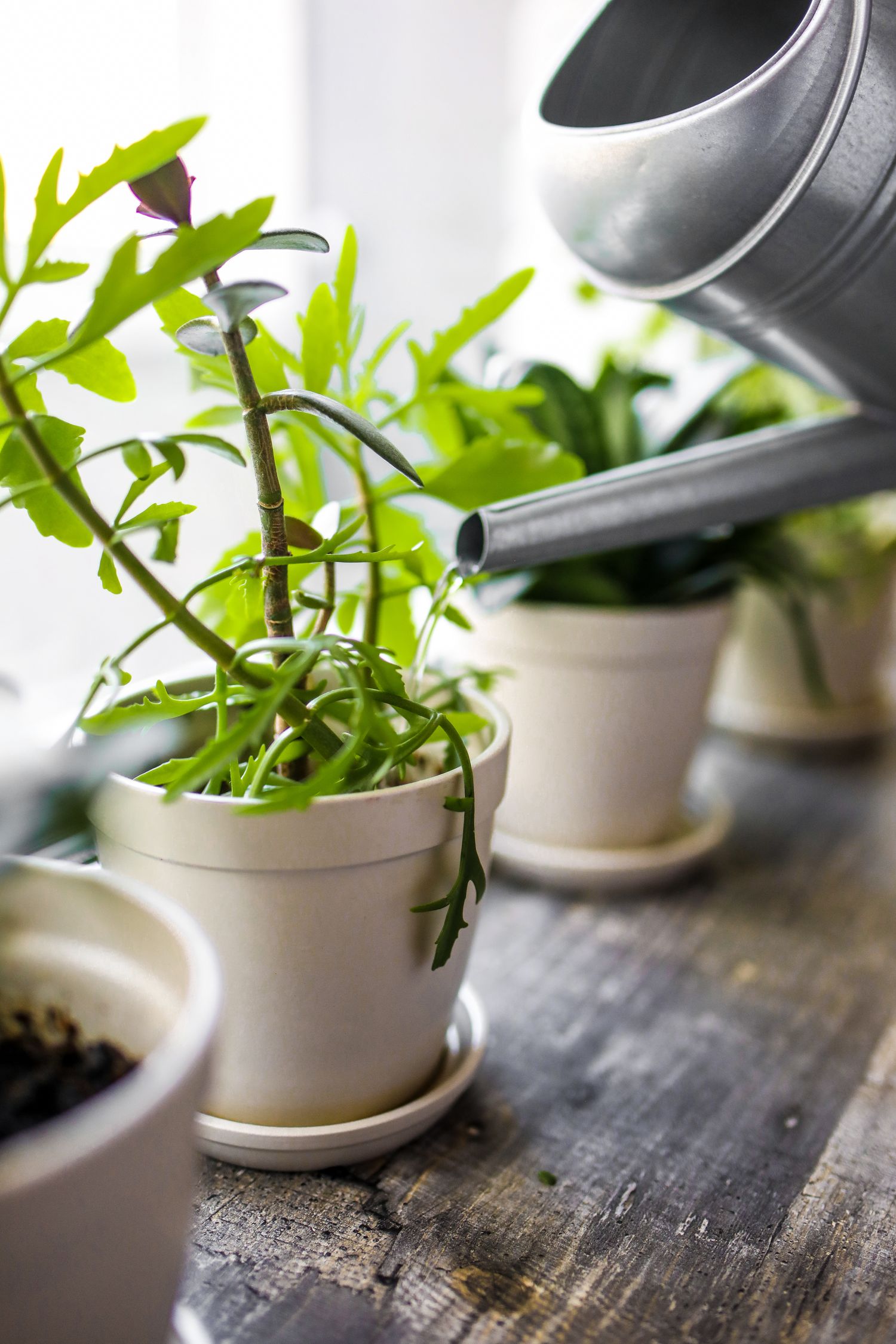
For indoor plants, the useful watering can is often the one that reaches the soil without catching leaves or spilling on the furniture. Capacity matters, but control and access usually decide whether it is convenient.
Match the spout to the route
Look at the plants you water most often. A narrow gap beneath leaves may suit a slender spout, while a large open pot gives more room. Check the complete reach, including the body of the can. A long spout is not helpful if the handle or reservoir hits the shelf before its tip reaches the pot. Try the movement with an empty container of similar size.
A removable rose spreads water differently from an open spout. Choose according to the plant and the watering method you intend to use rather than assuming one fitting suits every pot. Check whether the attachment can be removed for cleaning and stored securely. Small removable pieces are easy to lose if the can has no obvious place for them between uses.
Think about filling and carrying
Measure the gap beneath the faucet where you will fill the can. The opening needs to fit there without requiring the whole can to tilt awkwardly. A narrow fill hole can also make the interior difficult to rinse. Consider the weight when full, not only the empty product weight, and choose a capacity you can carry and control comfortably around the room.
Handle placement affects how the can tilts as water leaves it. A second grip may help with a larger design, but only if it is reachable in the positions you use. Avoid filling above the level specified by the maker. Water escaping from the fill opening while you pour is a handling problem that a longer spout does not solve.
Give the empty can a home
Check the storage footprint with the spout included. A slim body can still occupy a wide shelf once the spout projects from it. Choose a stable place where it will not be knocked onto nearby pots. Follow the manufacturer's cleaning instructions and inspect joints or seams for leakage during ordinary use.
Let the plant's needs determine how much and how often to water; the can's capacity is not a watering prescription. Empty or store the can as its maker directs, and keep it separate from containers used for household chemicals. A simple, easy-to-rinse design is often more useful indoors than a large decorative model that is difficult to fill and maneuver.