Choosing a mattress protector
A mattress protector is easier to choose when its job is clear. Basic surface protection, a removable washable layer and protection against liquid spills are related but different requirements.
Identify the type you need
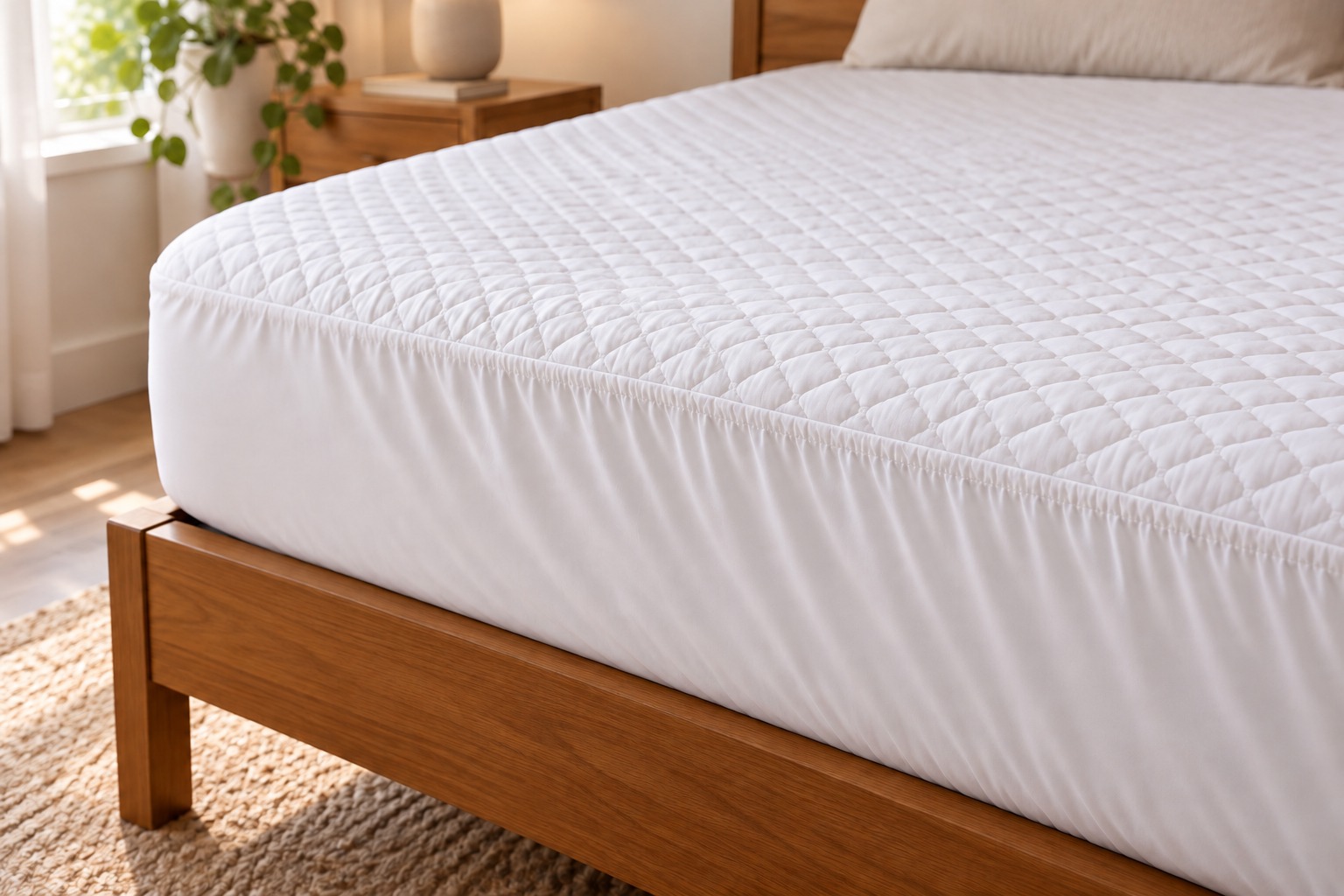
Compare the product's construction and stated function. A quilted pad may add a layer of fabric without being waterproof. A protector advertised for liquid protection should describe the relevant barrier and its coverage. Do not infer performance from thickness or from a word such as premium. Read whether the sides are covered as well as the sleeping surface, and whether the product encloses the whole mattress.
Health-related claims require their own evidence and should not be assumed from an ordinary bedding label. If a particular medical need determines the purchase, use appropriate professional guidance rather than treating this buying checklist as a treatment recommendation. For ordinary household use, focus first on fit, stated protection, care and whether the layer is comfortable in the existing bedding arrangement.
Fit includes mattress depth
Measure the mattress with any topper that will sit beneath the protector. Compare width, length and the permitted depth range. Corner straps, fitted skirts and full zipper enclosures attach differently. A strap design needs suitable access around the corners; an enclosure may require lifting or turning the mattress during installation. Consider whether you can perform that task comfortably and according to the mattress instructions.
Check how the protector works with the fitted sheet. Adding a layer can make an already tight sheet harder to secure. Look for seams, elastic or closures that could create unwanted bulk near the sleeping surface. Do not choose a much larger size as a substitute for adequate depth: extra width can leave folds even while the corners remain poorly fitted.
Washing is part of the specification
Read the protector's washing and drying instructions before choosing it for frequent laundering. A care routine that needs a large machine or a drying method unavailable at home may be inconvenient. Compare the stated process with the rest of your bedding, but do not wash different items together merely because they share a bed. Each product retains its own care requirements.
If uninterrupted protection matters, plan a spare that can be used while the first is being cleaned. Let the protector dry completely as instructed before refitting. Inspect seams, elastic and any barrier for visible damage, and follow the maker's replacement guidance. A damaged product should not continue to be relied on for a function that its condition may no longer support.
Keep the promise proportionate
A protector does not replace ordinary mattress care. Continue to follow the mattress manufacturer's instructions on ventilation, handling and cleaning. Keep the model details and care label so replacement shopping is straightforward. The right choice is one whose claimed function you understand and whose maintenance you can actually carry out, rather than the product with the longest list of undefined benefits.