Mirrors for a small entrance
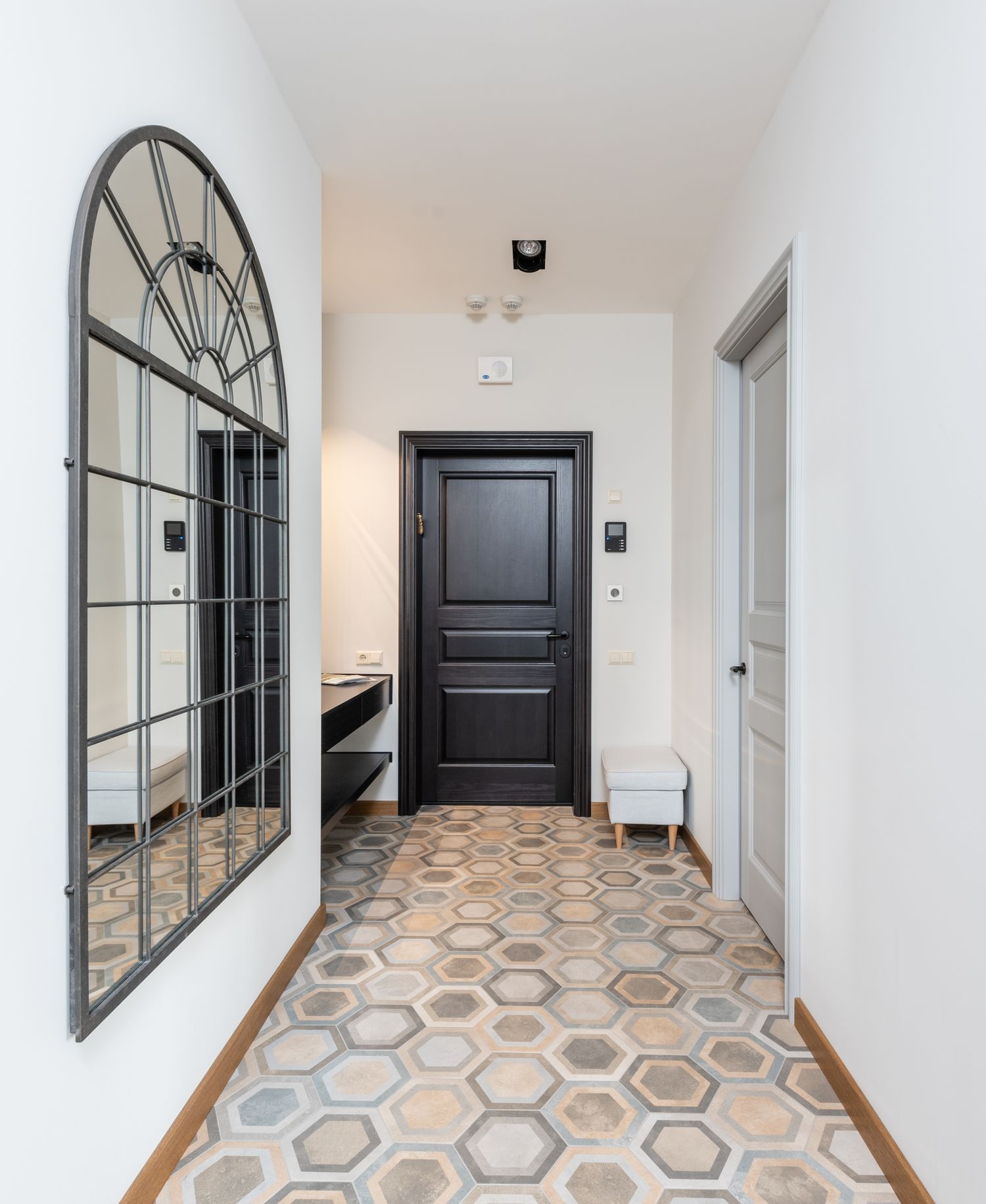
A mirror in a small entrance can help with a final check before leaving and reflect an existing view. Choose the size and position around those jobs rather than expecting any mirror to make every hallway work better.
Test the view at normal height
Mark a proposed outline with paper and check where different users stand. A face-level mirror and a full-length mirror need different vertical positions. Consider the distance available in front of it; a narrow hallway may not let someone step back very far. Keep the mirror clear of a door's swing and of hooks where coats would regularly cover the glass.
Look at what the mirror will reflect from the entrance and from nearby rooms. It may reflect a window, but it can also double the visible clutter of a shoe shelf. Move the paper outline or use an existing small mirror to explore the angle before fixing a large one. The reflected scene is part of the choice, not simply a byproduct of hanging the frame.
Select a mounting method for the actual wall
Read the complete installation instructions and the mirror's weight. Use the specified hanging system and fixings suitable for the wall construction. Adhesive mounting is only appropriate when the product and surface are designed for that method. Do not replace required brackets with improvised tape because the mirror appears light or because drilling would be inconvenient.
Freestanding or leaning mirrors have their own stability and securing requirements. A photograph of a mirror leaning against a wall does not establish that it can safely be left unsecured. Follow the manufacturer's instructions, especially where children or pets use the entrance. If the available position cannot accommodate the intended fixing, choose another mirror or location rather than compromising the installation.
Keep the surrounding space usable
A deep frame can project into a narrow route even when the glass itself is flat. Include decorative corners, shelves and any integrated hooks in the footprint. A mirror with a small shelf adds useful storage only if objects can be placed there without obstructing the view or falling into the passage. Check the shelf's intended load separately from the mirror's mounting requirements.
Allow access for cleaning the whole face and frame. Follow care instructions and avoid letting cleaning liquid collect where it could affect the frame or backing. Inspect the mounting periodically as directed. A plain mirror with a clear view, suitable fixing and easy cleaning access can be more useful than a larger decorative assembly that crowds the entrance it was intended to improve.