Plant pots and matching saucers
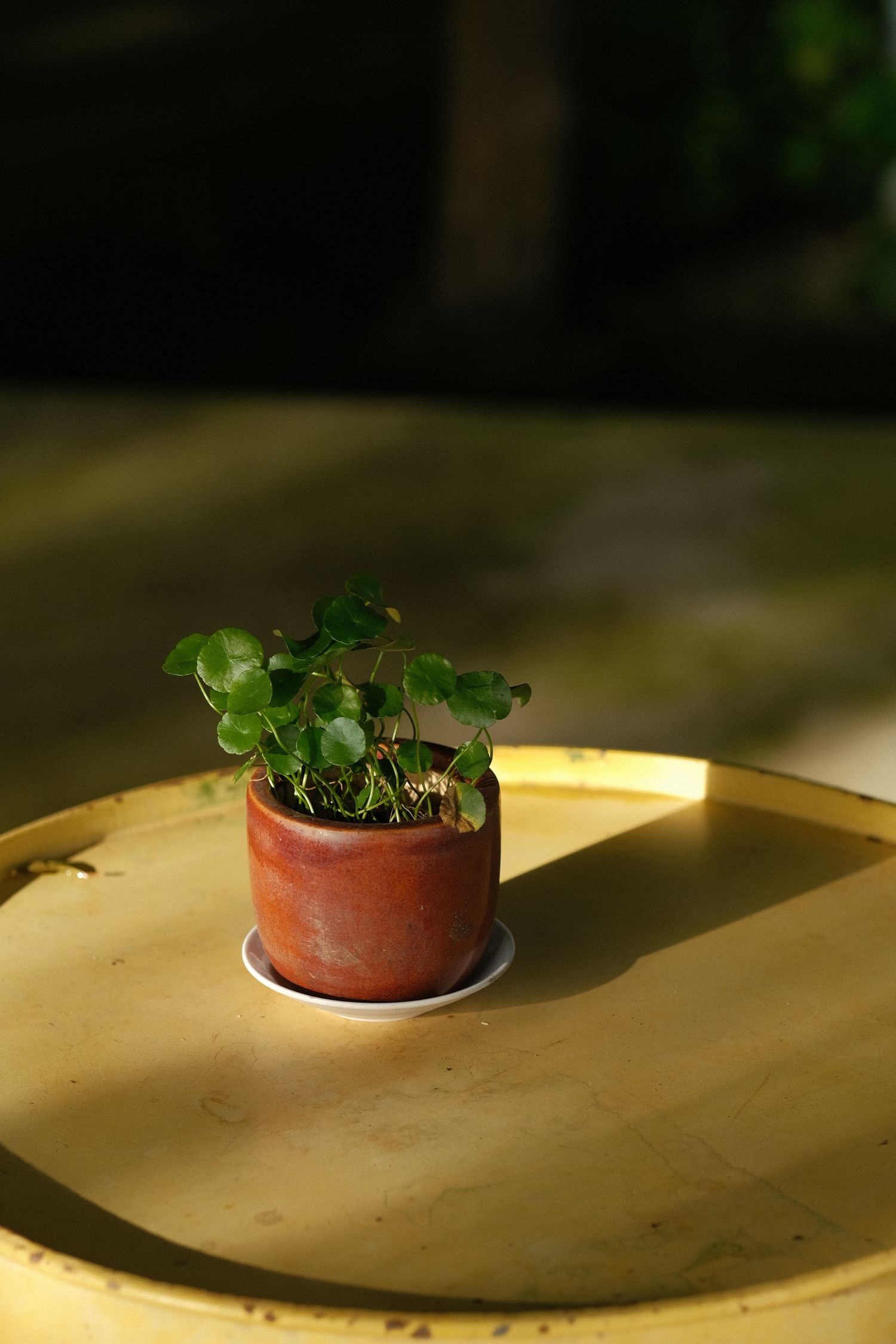
A plant pot, nursery pot and saucer can be three separate parts. Understanding which one holds soil and which one collects water makes it easier to choose sizes without creating an awkward cleaning arrangement.
Distinguish a pot from an outer cover
Check whether the proposed container has drainage openings and whether it is intended to hold the plant directly or act as an outer cover. Appearance alone does not answer that question. If a nursery pot will remain inside, measure its widest rim as well as the base. Leave enough room to lift it out without forcing the flexible sides against the outer container.
A decorative cachepot may have an interior that narrows near the bottom. Its largest stated diameter can therefore be misleading for a straight-sided inner pot. Compare internal measurements where available and account for any ledge. The plant should remain removable for appropriate watering and inspection rather than becoming permanently wedged into a container chosen only for its exterior proportions.
Size the saucer for the whole base
A saucer needs to support the pot's base and collect the water expected from the intended watering method. Compare its usable flat area and rim height, not just its outside diameter. A pot balanced on a sloping edge can sit unevenly. A tiny saucer beneath a wide pot also makes it difficult to see how much water has collected.
Keep access for emptying the saucer. Plant watering needs vary, so follow guidance appropriate to the plant rather than treating standing water as a universal storage method. If the pot is too heavy to lift safely, choose an arrangement that allows water to be managed without awkward handling. Do not make a decorative pairing that you cannot realistically service after watering.
Protect the supporting surface
Read the container's instructions for indoor use and surface protection. Unglazed or porous-looking materials should not be assumed watertight, and a glazed appearance does not prove that every seam is sealed. Check underneath after the first appropriate use and during routine care. Any protective mat or stand must itself suit the furniture or floor beneath it.
A saucer can catch water from the pot while condensation or a spill still reaches the surrounding surface. Keep the area accessible rather than pushing the whole arrangement tightly into a corner. Remove trapped grit before moving the pot across a finish that might scratch. Lift using suitable handling methods instead of dragging a heavy pot by its rim.
Buy for the next care task
Consider how you will remove fallen leaves, turn the plant and inspect the pot. Handles and decorative projections can make those tasks harder in a small window space. If the arrangement sits on a stand, check the stand's usable platform and load requirements using the complete watered plant and container setup.
Save the size information when a combination works well, but do not automatically buy the same pot for every plant. Root space, watering needs and growth differ. This selection process is about making the container system workable; the plant's care requirements still determine the appropriate growing conditions and whether a change of pot is needed.