Storage benches for the entryway
A storage bench combines a seat with a container, so it needs to pass two different tests. It must be intended to support sitting, and its storage must remain usable in the entrance where it will stand.
Confirm that it is a seat
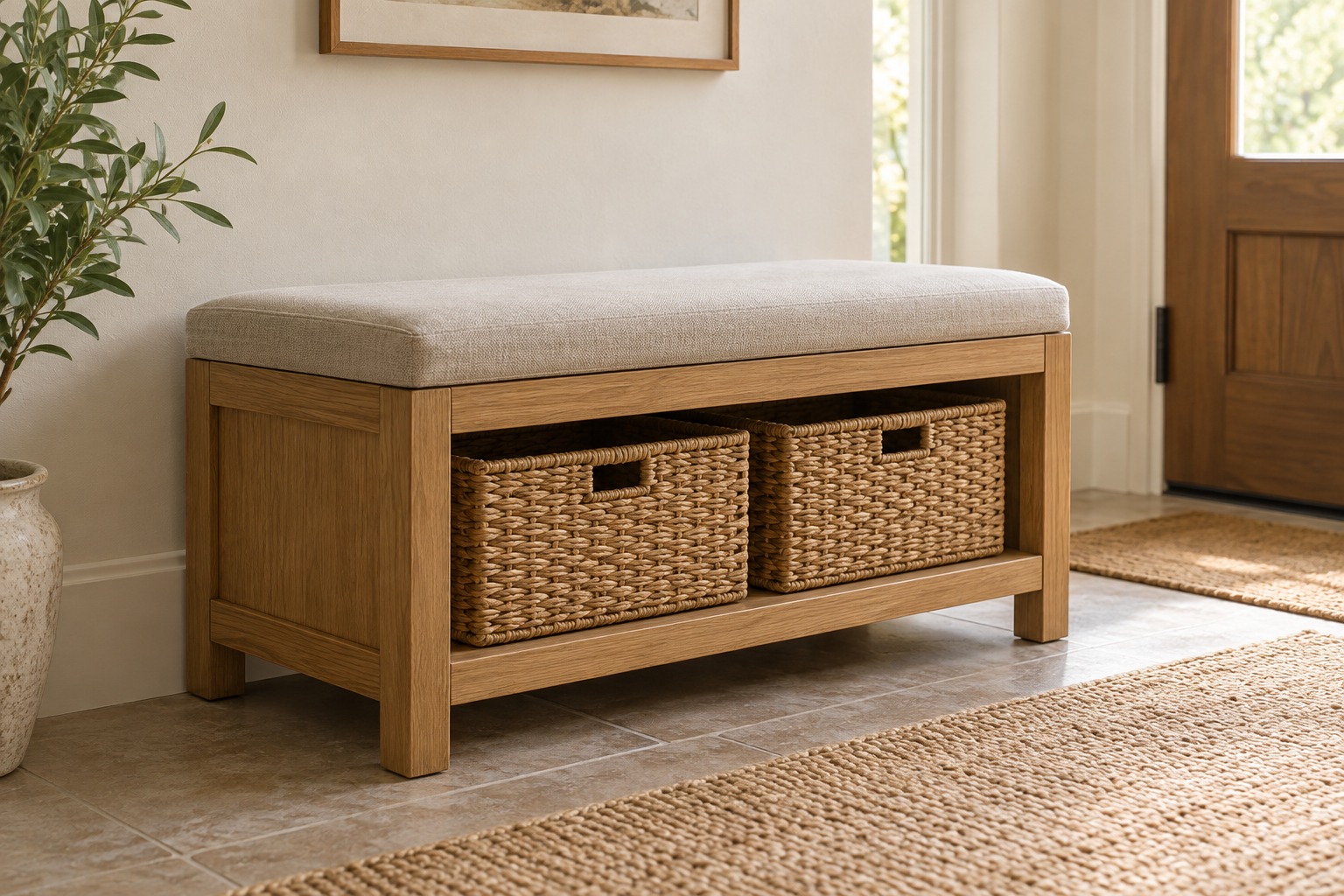
Check the manufacturer's intended use and seating load, rather than assuming any box with a cushion is a bench. The stated capacity of an internal shelf is not the seating capacity. Look at the complete assembly instructions and any wall-fixing requirements. A decorative photograph cannot replace those details, especially for a narrow or tall design that looks stable only while empty.
Consider who will use the seat and how they put on shoes. The top should be at a workable height and leave room for feet in front. Arms or raised sides may help define the sitting area but reduce the available width. If two people might sit together, check that the product is specifically suitable for that use instead of adding their space requirements alone.
Choose how the storage opens
A lift-up seat needs space above and behind it. Follow the product instructions for hinges and lid supports, and keep fingers away from closing edges. Do not rely on an improvised prop to hold a heavy lid open. Think about where a cushion, bag or coat will go before the storage can be accessed; a seat permanently covered in objects makes this arrangement less convenient.
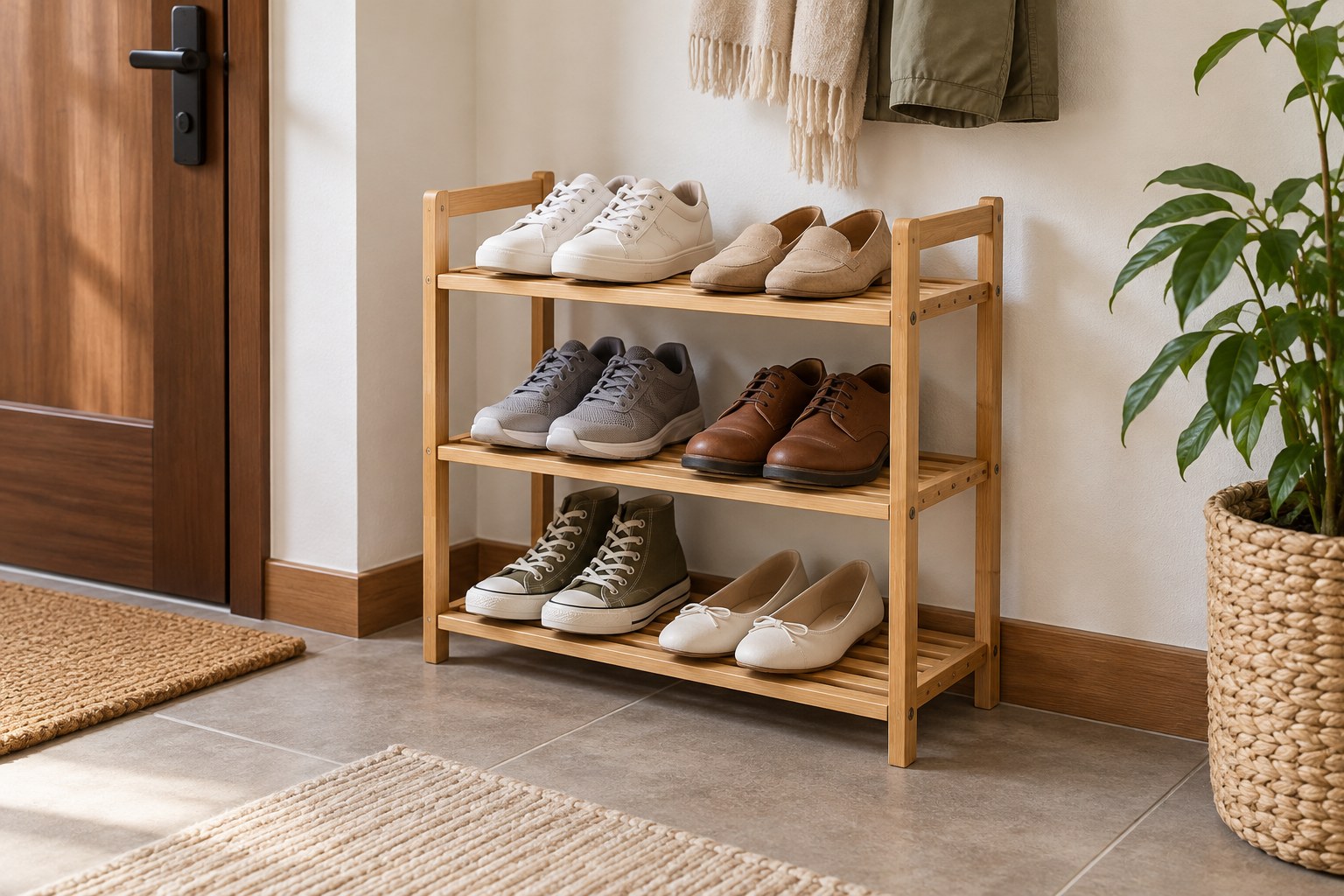
Drawers and front doors avoid lifting the seat but need clear space in the hallway. Pull one out in the footprint sketch and check the remaining route past it. Open cubbies offer direct access to shoes, while baskets conceal smaller items. Choose openings large enough for the actual footwear, including high shoes that may not fit a low compartment.
Give the bench a workable footprint
Include handles, feet and any back panel in the measurements. Check the entrance door, closet doors and the place where bags are normally set down. A bench that fills the entire wall can still make turning into the room difficult. Keep a clear passage and avoid treating the top as an overflow shelf that eliminates the seat's main purpose.
For damp footwear, follow both shoe care and furniture instructions. A storage compartment is not automatically a drying cabinet. Removable trays may help with dirt where the design allows them, but they should not obstruct ventilation or access. Clean beneath and inside the bench periodically. A modest amount of accessible storage is often more valuable than a deep compartment that is rarely emptied because reaching it is too much work.