Trays for everyday pocket contents
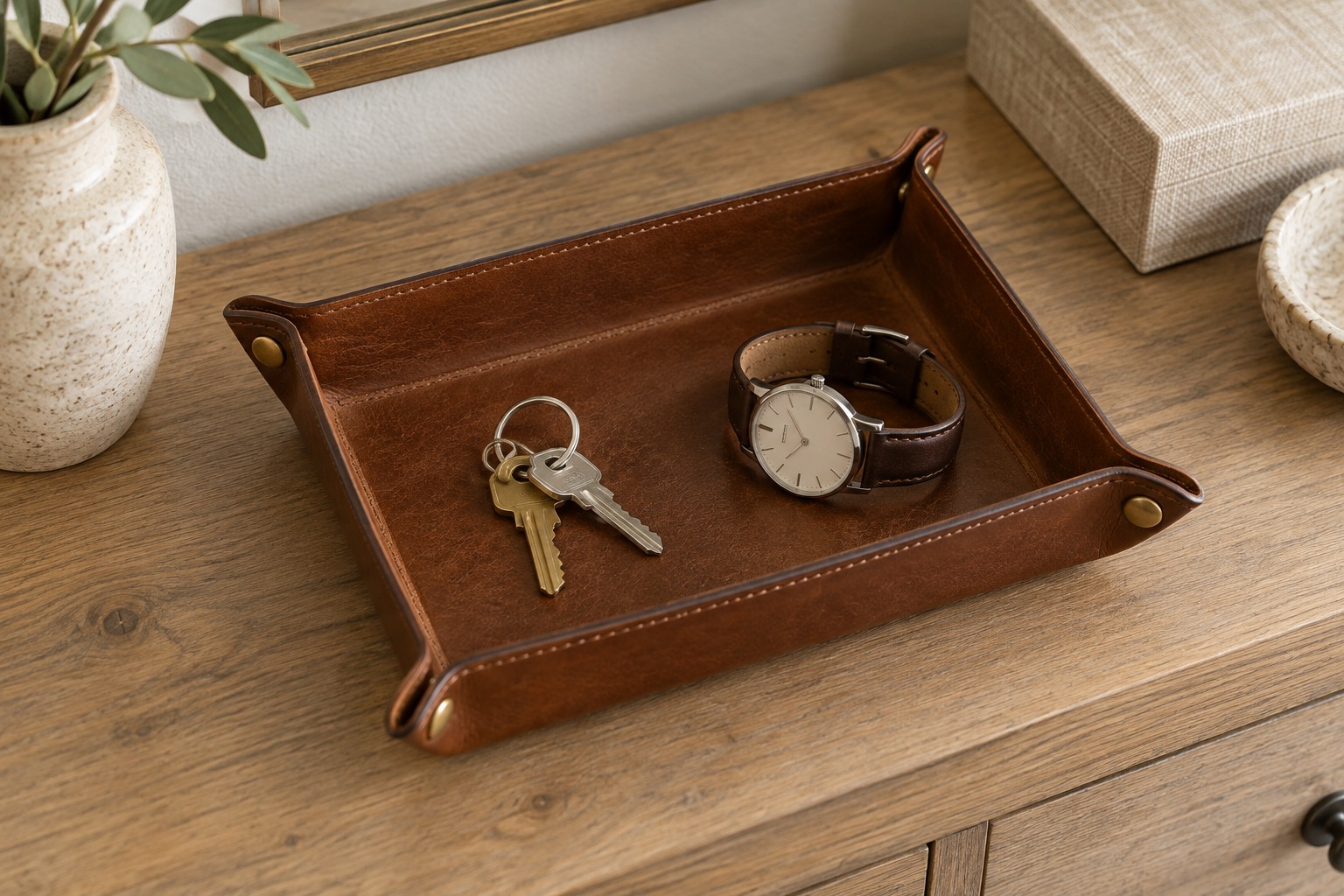
A tray near the entrance works best when it has a clear job: collecting the small things you take out of your pockets. It should make the next departure easier, not become a permanent home for every loose object.
Size the tray around a daily handful
Lay out your usual keys, wallet, transit card and other everyday items. Leave enough space to pick up one without moving all the others. Compare the usable flat base with the external dimensions; sloping sides and thick rims can reduce it substantially. A shallow tray makes contents visible, while a deep bowl can hide a small key beneath a larger wallet.
Choose a position within comfortable reach on the way in and out. Check that the tray does not block a light switch, door movement or another frequently used surface. If several people share the space, separate small trays or clearly divided areas can be easier than one crowded container. The point is to know which items are yours without searching through a mixed pile.
Think about the contact surfaces
Keys can scrape delicate finishes, so consider the tray's material and the surface beneath it. A soft removable lining may reduce direct contact but adds a cleaning step. Check whether the lining is washable or simply wipeable. A heavy tray should sit securely on the chosen furniture, and any protective feet should be compatible with its finish rather than assumed harmless on every surface.
Avoid choosing a decorative texture that catches key rings or small clasps. Try to picture how you will lift items with one hand while carrying a bag in the other. High sculpted edges may look appealing yet interfere with that motion. If a phone will be charged in the tray, keep the device and charger's required ventilation and use instructions in mind; the tray itself should not become an improvised charging enclosure.
Keep the contents temporary
Move receipts, coins and rarely used keys to their intended places regularly. Give objects that do not belong in pockets a different destination. If the tray repeatedly overflows, first reduce the contents rather than buying a larger one. A larger surface can simply hide the same sorting problem for a little longer.
Place the tray where valuables are not casually visible from outside, and avoid attaching identifying address details to keys stored together. Clean the base according to its care instructions and inspect removable pads for trapped grit. A successful pocket tray is almost empty when you leave home and ready to receive the same small group when you return, with enough space to see at once what is missing.