A bottle opener for everyday use
For ordinary capped bottles, a simple opener can be enough. Choose the grip and opening shape for the closures you actually use, then give the tool a clear place near where drinks are prepared.
Separate cap types first
A crown-cap opener, screw-cap aid and corkscrew perform different jobs. A combined tool can be useful, but only when its parts are intended for the relevant closures. Do not use a bottle opener to pry at a lid or fitting outside its stated purpose. The shape of the opening and the maker's instructions should make the correct engagement clear.
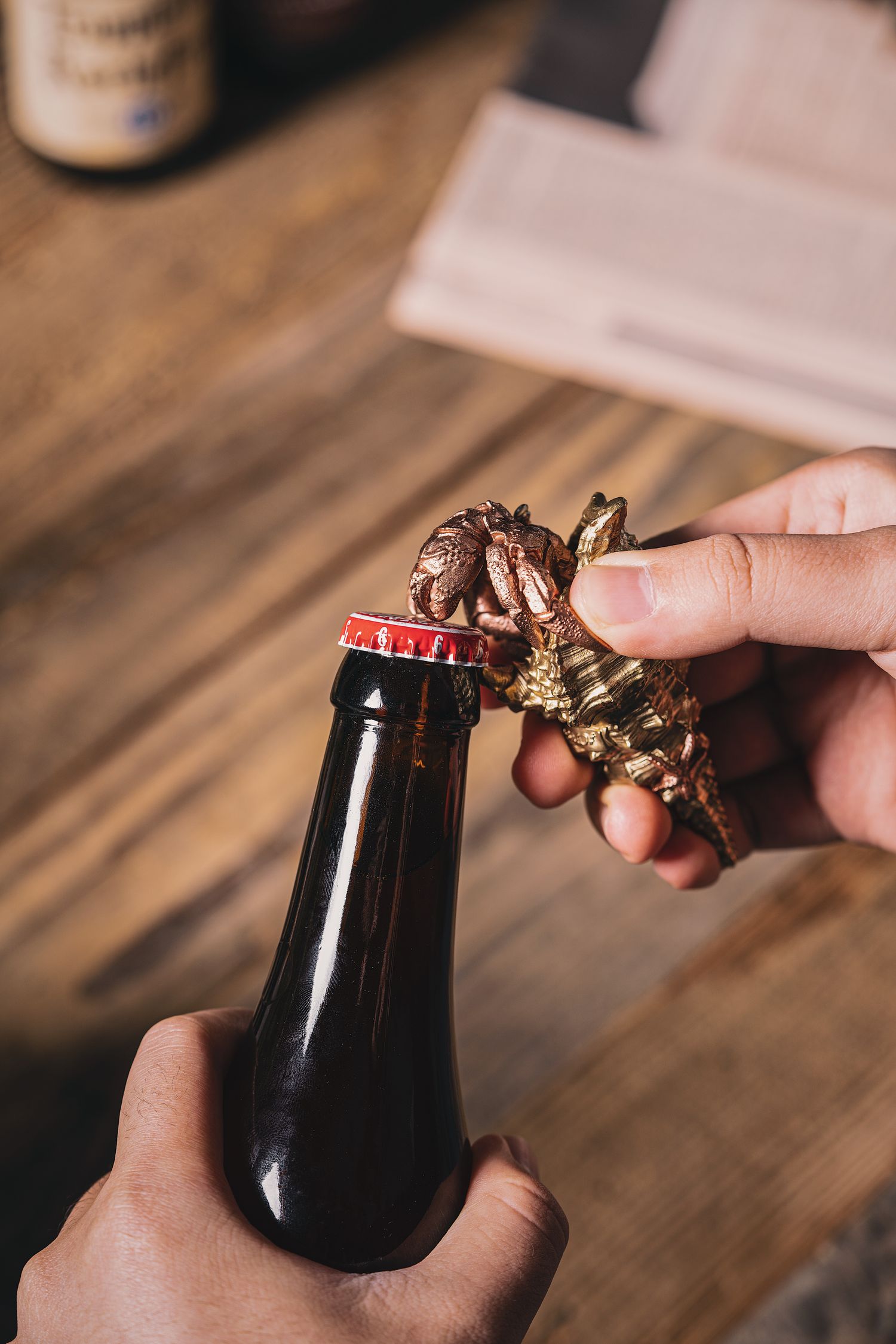
For a crown cap, look at how the opener fits under and over the cap as intended. The handle should give enough room for a controlled grip without forcing the hand against the bottle neck. A tiny novelty opener may store easily yet be awkward for the person using it. Compare ordinary handling rather than treating small size as an automatic advantage.
Choose loose or fixed storage
A handheld opener can move with a tray or picnic bag, while a wall-mounted design stays in one place. A fixed opener needs suitable mounting and space beneath for the bottle. Follow the fixing instructions and consider how removed caps will be collected. A cap catcher should be reachable for emptying instead of becoming a hidden container that is rarely checked.
Magnetic or hanging storage can keep a handheld tool visible, but check that it is securely supported and does not interfere with drawers or nearby equipment. Decorative loops are not always intended for every hanging arrangement. If the opener lives in a cutlery drawer, choose a position where its edge cannot catch fingers reaching for something else.
Keep the contact area intact
Clean the opener by its specified method after spills or ordinary use. Inspect the working edge for damage and stop using it if it no longer engages properly. A damaged tool should not be compensated for by pressing harder on the bottle. Check bottles themselves for obvious damage before handling and follow the closure's opening instructions.
If you frequently cannot find the opener, a designated storage spot may solve more than buying several replacements. Choose one or two tools with clear roles instead of accumulating novelty shapes. A straightforward opener that fits the hand and can be cleaned easily is usually enough for the recurring task of opening the bottles you actually keep at home.