Bedside tables with enough surface
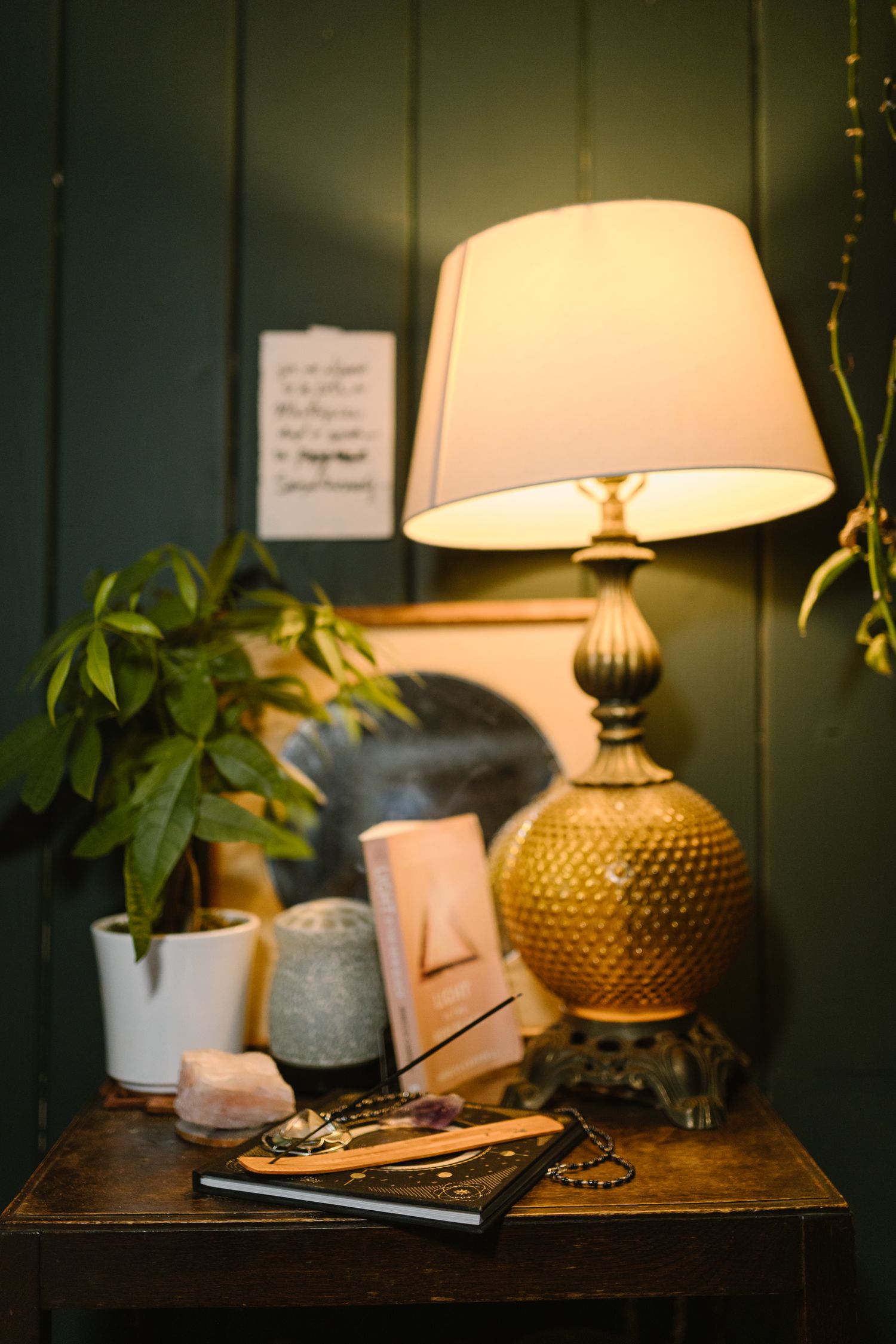
A bedside table earns its place through a few ordinary objects: a lamp, a glass, a book and perhaps a phone. Arrange those objects first, then choose a surface instead of filling a gap with the smallest available table.
Work from the mattress height
Measure the top of the mattress in its usual setup, including any topper. Compare the proposed table height with the position where your hand naturally reaches while sitting or lying down. There is no single height that suits every bed and person. A surface can look aligned in a room photograph and still be awkward to reach over a thick bed frame.
Place paper shapes matching the lamp base, book and other regular items within the proposed tabletop outline. Leave room to set down a glass without moving the lamp. Check the route of charging cables and whether an outlet remains accessible. A very narrow table may hold every object individually but fail as soon as the book is opened or the phone is connected.
Drawers need space in front of them. A bedspread hanging into the opening can interfere with access, while a door on the table may swing into the bed frame. Open shelves avoid that movement but leave contents visible and closer to floor dust. Choose the arrangement around what you need to reach at night rather than the maximum number of storage compartments.
Allow for the room around the table
Check the path beside the bed when the table is in place. Rounded corners may be less intrusive in a tight route, but the full footprint still matters. Include legs that flare outward and handles that project beyond the top. If the table is wall mounted, follow the fixing instructions for the actual wall and keep concealed services in mind before drilling.
Select a surface with care instructions appropriate to the objects placed on it. A glass of water makes spill handling relevant, and a coaster should fit without consuming the entire remaining space. Avoid assuming a wood-look finish tolerates water like a different material. Keep lamp cords away from drawer mechanisms and routes where they can be pulled by bedding.
For two sides of a bed, matching tables are optional. Different available widths can justify different sizes while keeping useful heights and access. Before buying a pair, check both sides separately. A nearby closet door, radiator or outlet can make a table that works well on one side unsuitable for the other.