Bread boxes with usable space
A bread box can occupy a surprisingly large part of a counter while still being too small for a favorite loaf. Judge the interior and opening movement separately from the attractive outside shape.
Start with the loaf, not the counter photo
Measure the bread you normally buy, including its wrapping if you intend to keep that on. A round loaf needs a different footprint from a long sandwich loaf. If rolls and bread share the box, consider whether they can sit beside each other without being crushed. Internal corners, rounded ends and lid hardware can reduce the useful space substantially.
Next measure the available counter area. Include room behind the box for cables or a raised backsplash and space in front to remove bread. A box that technically fits between appliances may leave no comfortable place to hold the loaf while opening it. Make a full-size paper footprint and practice the movement before committing to a bulky container.
Compare how the door opens
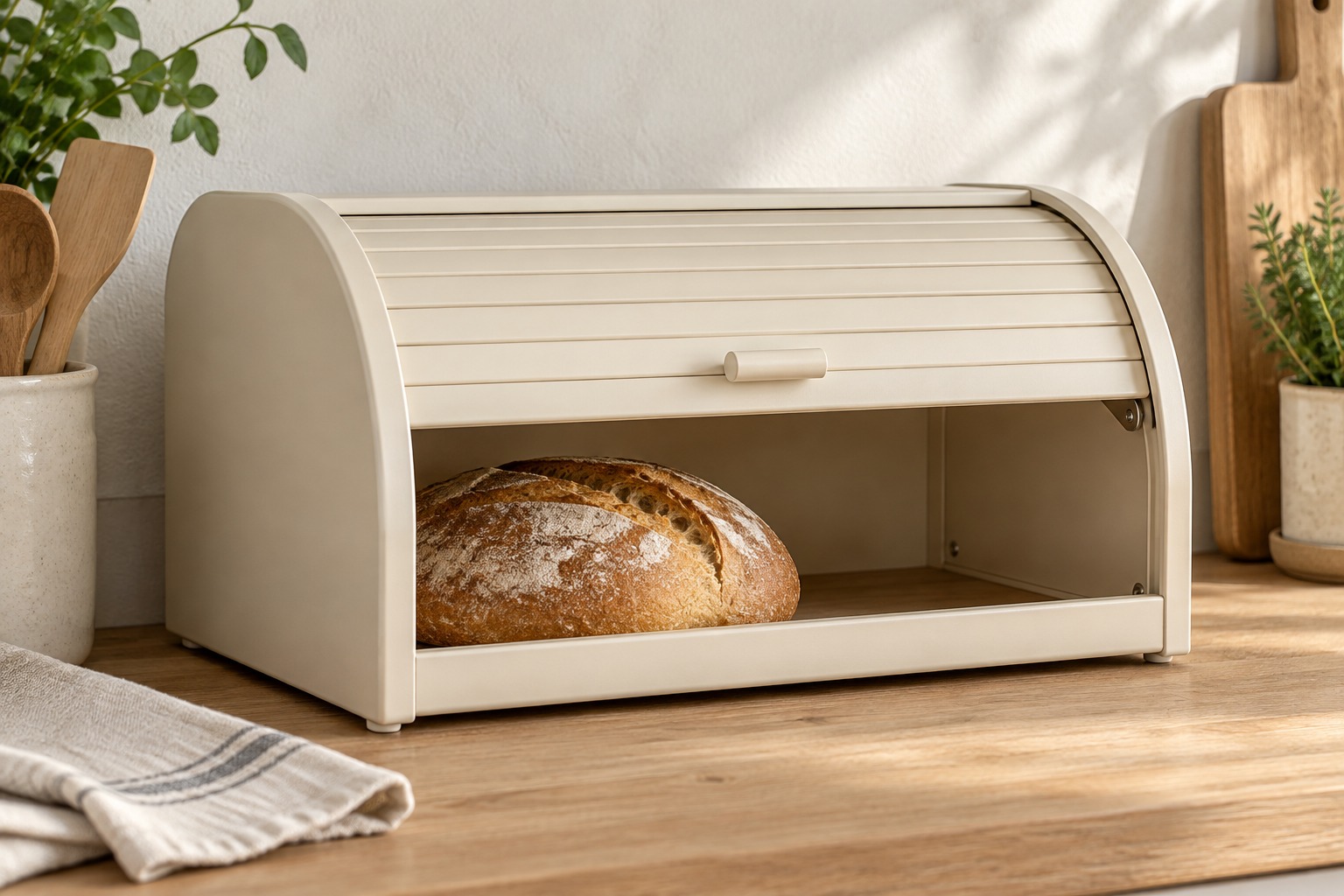
A roll-top lid generally keeps its movement close to the body, but its track needs to stay accessible for cleaning. A hinged lid may need clearance above and behind. A front flap projects into the work area when open. Look at the fully open position rather than assuming the closed dimensions describe all the space the box requires.
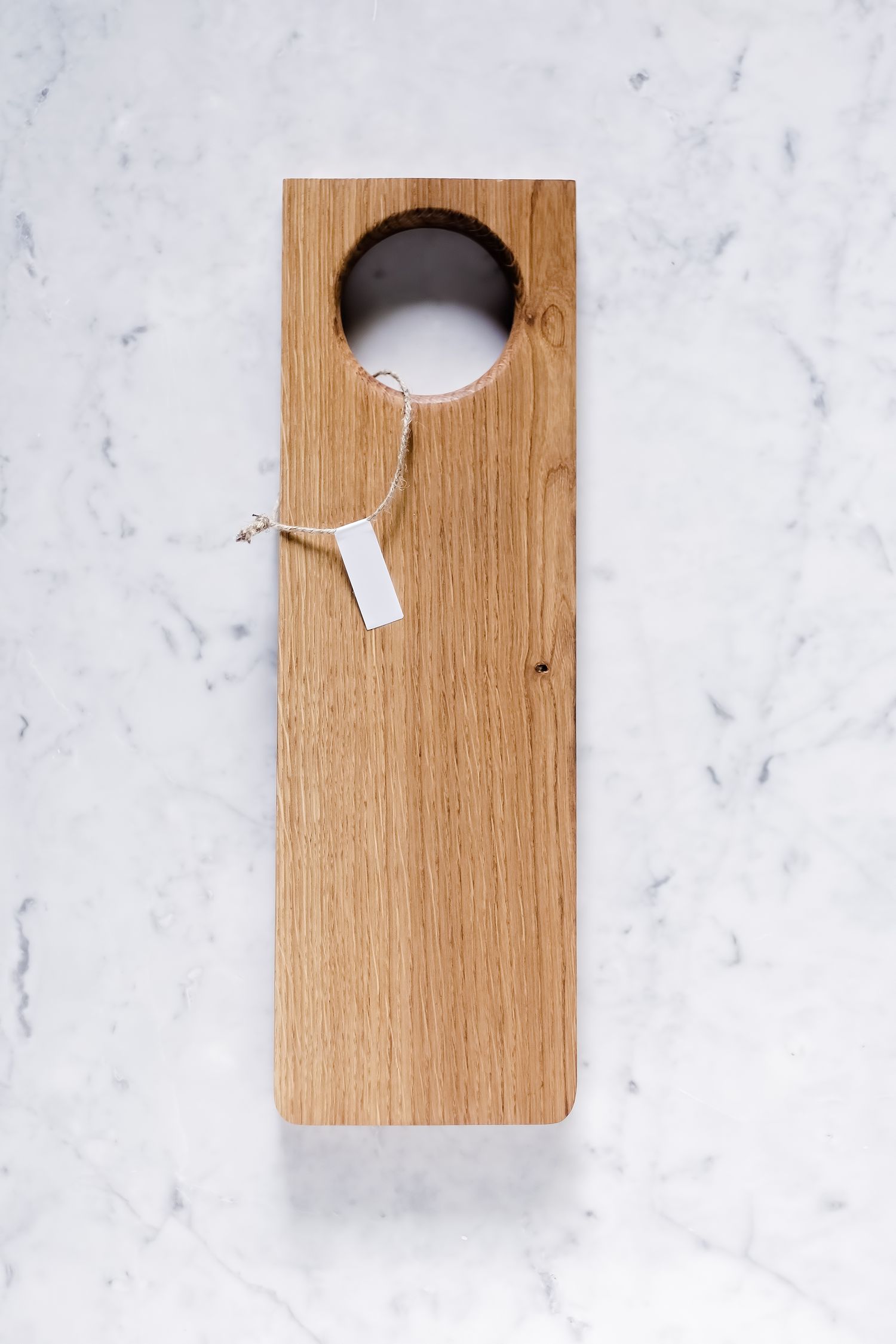
Some boxes offer a removable lid intended for use as a board. Check that this is an explicit feature and consider whether the lid will be convenient to clean after cutting. If opening the box means moving a stack of objects from its top each time, that surface is not genuinely available for permanent storage. Avoid building a daily obstacle into the location.
Plan for crumbs and mixed contents
Look inside for corners, tracks and joints where crumbs can collect. Can you reach them with the cleaning method the maker permits? A removable liner or base may make access easier, but only if it can be lifted out without tools or unnecessary dismantling. Wood, coated metal and plastic parts may have different care requirements even within the same product.
Do not interpret a bread box as a promise of a particular shelf life. Bread type, packaging and storage conditions vary. Follow appropriate guidance for the bread you keep, and remove unsuitable contents promptly rather than relying on the container to correct them. A box is most useful when it makes the current contents visible enough to check and convenient enough to use, without encouraging an oversized collection of forgotten bread.