Dish racks and drainage direction
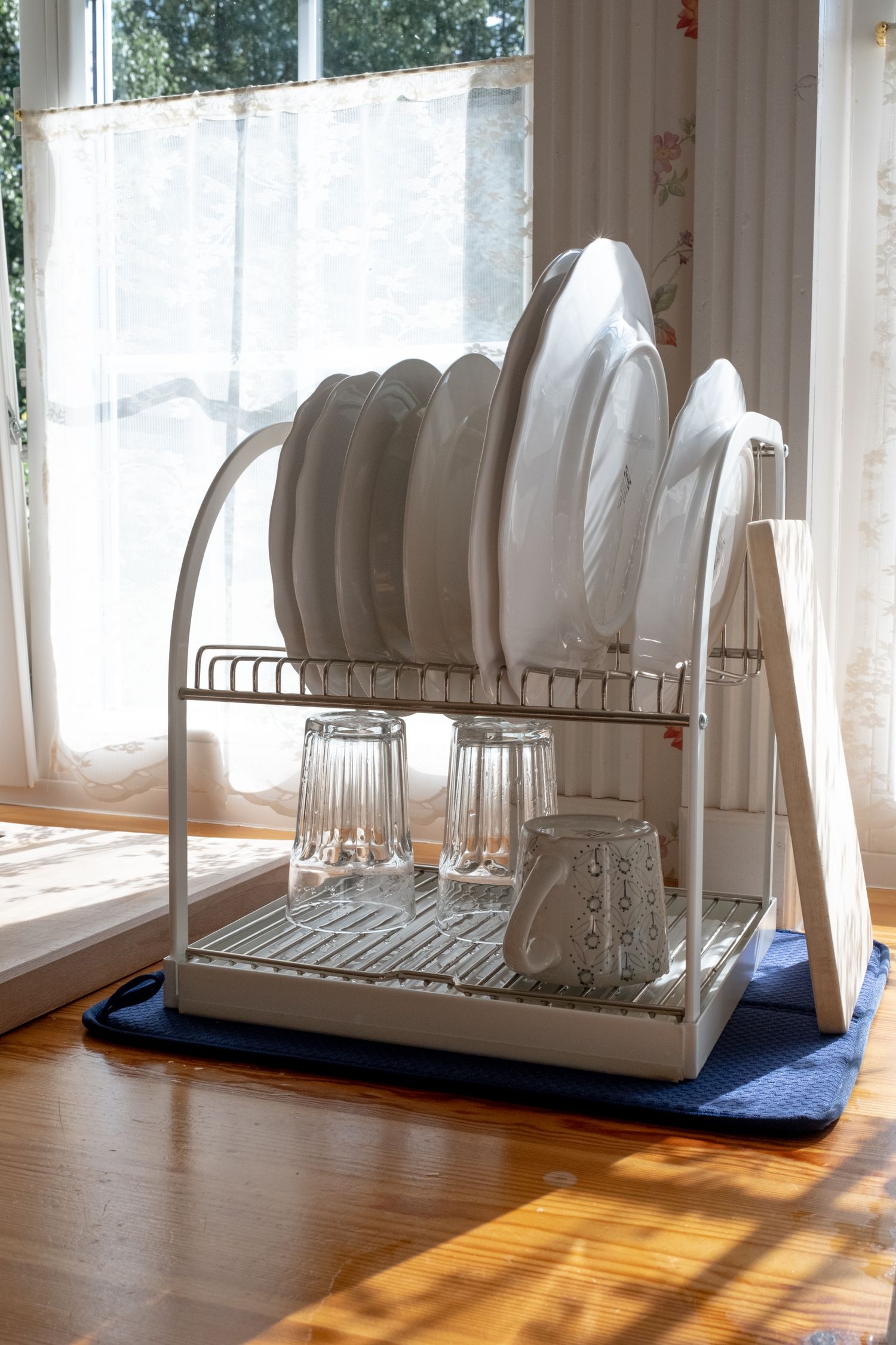
A dish rack needs a route for the water it collects. Before comparing plate slots or cup holders, work out whether the rack will drain into the sink, sit above it or collect water in a removable tray.
Trace the water's route
Place a paper outline of the rack beside the sink, including any spout extending beyond its main body. Check whether the spout reaches over the basin and clears the raised rim. A drain channel aimed toward the sink is of little use if its end stops short on the counter. Also leave space to operate the faucet and reach the soap.
Some designs offer a rotating outlet; others require a fixed orientation. Check which side the cutlery container occupies when the outlet faces the correct way. The arrangement shown in a product photograph may be reversed from your kitchen. If a tray is designed to retain water rather than discharge it, decide where you will empty it without carrying it over clean dishes.
Fit the dishes you wash by hand
Measure one large plate, a frequently used bowl and your widest drinking glass. Plate slots need to hold those actual shapes without forcing them or leaving them leaning against a neighboring cup. Deep bowls can occupy several slots. A rack that appears generous when shown with thin plates may leave little space for the items you use each day.
Think about the heaviest hand-washed item separately. A large pan can obstruct the outlet, cover the cutlery section or upset an otherwise balanced load. It may be better dried in another suitable area rather than choosing a much larger rack for an occasional pan. Keep sharp utensils positioned according to a suitable holder's design, with their edges away from reaching hands.
Make removal and cleaning part of the choice
Examine how the tray, cutlery cup and any drain channel detach. You should be able to reach corners that collect water without repeatedly dismantling a complex frame. Check the maker's cleaning instructions for every component; a metal frame and plastic tray may not have the same permitted treatment.
Look beneath the rack as well as inside it. Feet should sit properly on the counter and leave the arrangement stable under an ordinary load. Keep the supporting surface clean and dry as needed, and inspect any pads that can trap debris. A rack intended to bridge a sink needs the support dimensions specified for that use; a countertop model should not be improvised into one.
Rehearse a normal washing-up session
Arrange your typical dishes before committing to a location. Confirm that an open cabinet door does not hit tall plates and that you can remove a glass without lifting several other items first. Keep the clean-dish area separate from the route used for dirty pans.
After use, check where water actually remains. An overflowing tray, a spout pushed out of position or water trapped against the wall calls for an adjustment. The successful arrangement is one that drains as designed and can be cleared and cleaned regularly, not simply the rack with the greatest advertised number of plate spaces.