Food containers with matching lids
Food containers become frustrating when the boxes stack but the lids do not match. Plan a small system around the portions you store, the appliances you use and a reliable way to identify each lid.
Choose useful portions before a large set
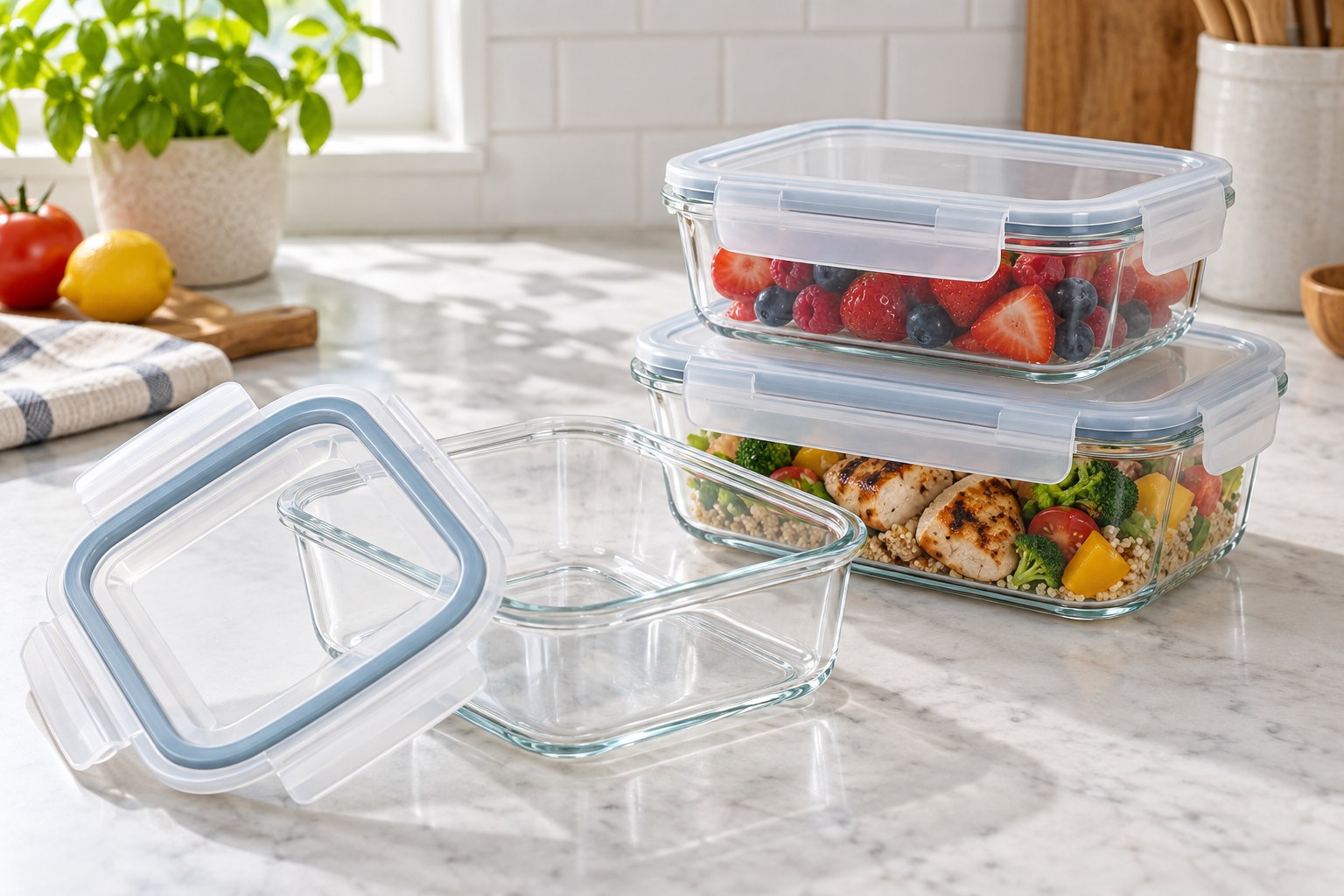
Look at a normal leftover portion, a packed meal and the dry ingredients you keep. These may need different shapes and volumes. A large set often includes sizes that are rarely used, while several containers of one useful size may serve a regular routine better. Compare the usable interior and the space taken by clips or projecting rims.
Rectangular shapes can use a shelf efficiently, but rounded corners may be easier to reach during cleaning. Tall narrow containers suit different contents from shallow wide ones. Think about how food will be put in and removed. A container that holds the right volume can still have an opening too narrow for a spoon or serving utensil.
Treat the lid as a matched component
Read the product's size or model markings and check whether lids are interchangeable within the range. Similar appearance does not establish a seal. If matching is difficult, keep a simple note or use an appropriate external label that does not interfere with contact surfaces. Do not force clips around a lid that only almost fits.
Check whether seals are removable and how they are refitted. A removable gasket can make cleaning possible around its channel, but it also creates a part that can be misplaced or installed incorrectly. Follow the intended assembly and inspect the seal before relying on any stated leak resistance. A food-storage lid is not automatically suitable for carrying liquid loose inside a bag.
Read appliance permissions separately
Confirm freezer, microwave, oven and dishwasher suitability for the exact container and lid. One part may be allowed where the other is not. A glass body does not establish that its plastic lid can be heated, and a microwave-safe description does not mean oven-safe. Follow instructions on venting or lid removal for the relevant appliance and food.
Food safety depends on the food, temperature, time and handling, not just on a fitted lid. Use current official guidance appropriate to the food being stored. Avoid treating a container feature as a promise of a universal storage duration. Keep dates or contents identifiable when that helps the household use the food appropriately.
Stack in use and nest when empty
Compare the filled footprint with refrigerator shelves and drawers, including the space needed to lift the container out. A stable stack should use the intended lid and base shapes without balancing different sizes precariously. Do not let a tall stack make the lower container impossible to retrieve without moving everything else.
For empty storage, decide whether lids will stay attached or be grouped separately. Nesting boxes can save space, but make sure all parts are clean and dry as directed first. Inspect cracks, damaged clips and deformed lids during washing, and follow replacement guidance. A smaller collection with identifiable matching parts is often easier to use than a cupboard full of almost-compatible containers.