Insulated mugs and lid cleaning
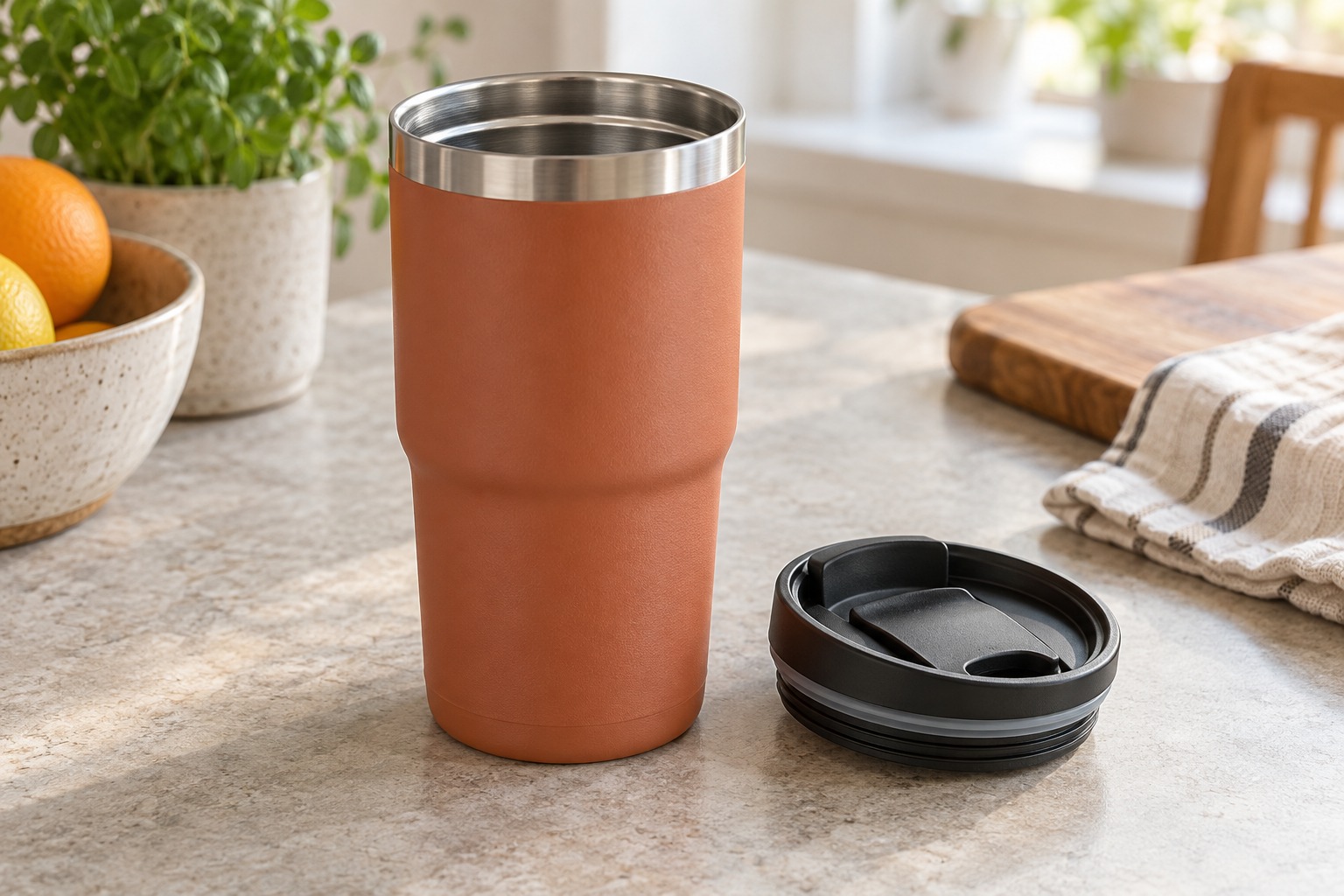
The lid is often the most complicated part of an insulated mug. Before comparing capacity or color, check how you will reach its drinking channel, seals and moving pieces after everyday use.
Choose the closure for the journey
A mug that stays upright on a desk needs a different closure from one carried inside a bag. Read the exact claim for the complete mug and lid combination. Splash resistance should not be treated as permission to turn it upside down beside a laptop. For bag use, look for an explicit suitability statement and follow all restrictions on contents, filling and closure.
Consider how the lid opens when the mug is held in your usual hand. A sliding piece, button or twist mechanism should be understandable and easy to check. More moving parts can mean more surfaces to clean. If you cannot tell whether the drinking opening is closed without looking closely, decide whether that is acceptable for the places where you intend to use it.
Find the cleaning instructions before buying
Look for a diagram or video showing the actual lid, not a generic mug-care page. Identify which seals, sliders or valves are removable by the user and which should remain assembled. YETI's MagSlider cleaning instructions, for example, specifically show removal of the gasket and magnetic slider. That design-specific guidance should not be transferred to a different lid simply because it looks similar.
Check whether the body and lid share the same washing instructions. The lid may need disassembly even where dishwasher use is permitted. Think about the tools required to reach the drinking channel and whether a small part can be kept safely in a suitable washing basket. Avoid a design whose essential cleaning steps you are unlikely to carry out after each use.
A narrow opening in the mug itself also affects handwashing. Compare its width with the cleaning tool you plan to use and check that the bottom can be reached without scraping the surface. Do not assume an aggressive cleaner or abrasive pad is suitable because the outside looks metallic. Coatings, interior finishes and seals can have separate care limitations.
Reassemble carefully and keep parts identifiable
After cleaning, inspect the components and let them dry as instructed. Refit seals in their specified position and orientation, without twisting them or leaving an edge outside its groove. A seal that appears roughly in place may prevent proper closure. If a component is missing or damaged, use the correct replacement before relying on the mug's stated spill protection.
Keep the model name or lid code with the instructions. Similar-looking replacement lids may belong to different sizes or product generations. Compare fit and compatibility rather than ordering by approximate diameter alone. If a lid cannot be cleaned adequately or no longer closes as intended, replacement may be more sensible than continuing to struggle with it. The most useful mug is one whose whole cleaning routine fits the way you actually live.