Letter trays that remain accessible
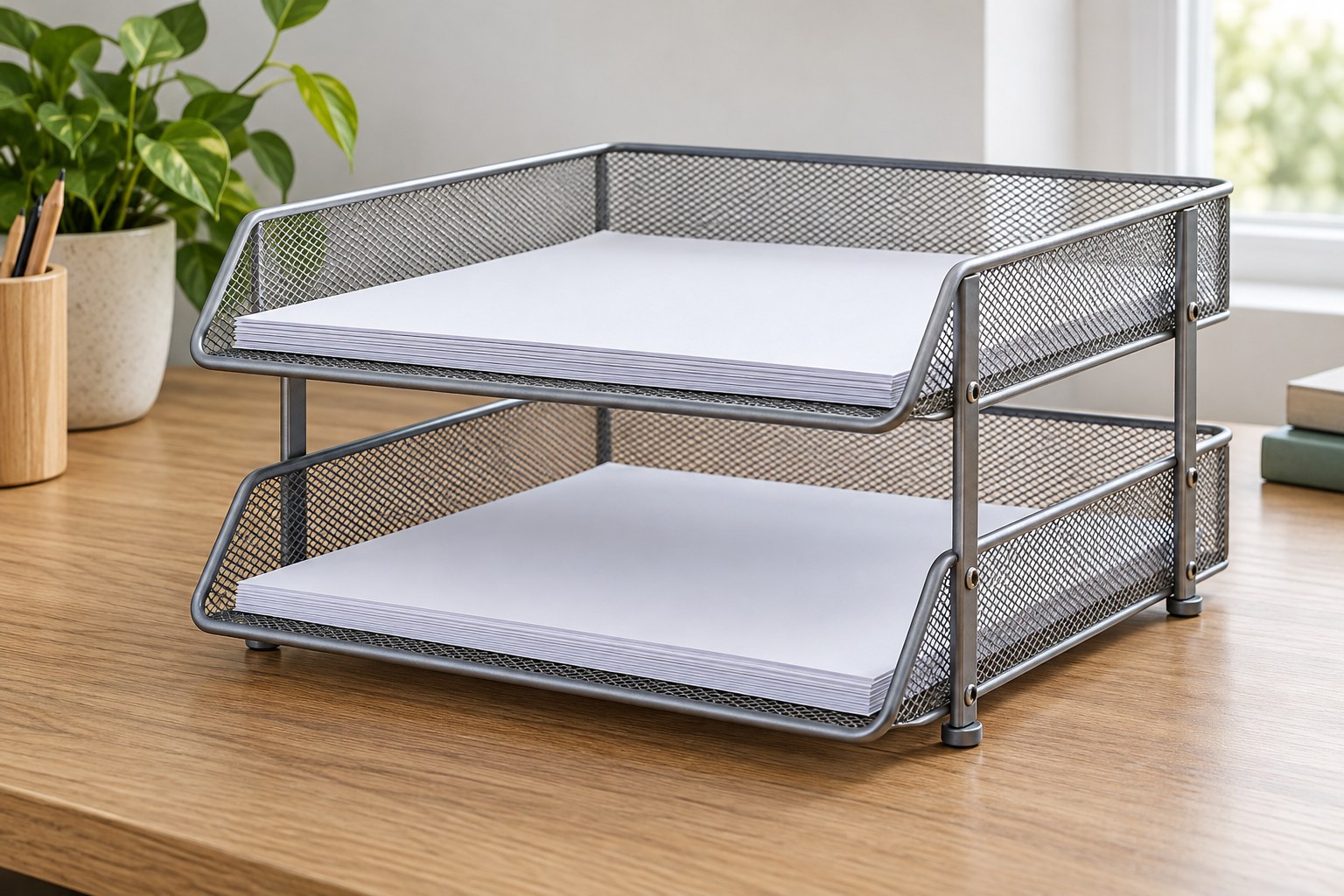
Stacked letter trays save horizontal space only if every level remains reachable. Choose them around the papers moving through your desk and the clearance needed to pick up a single sheet.
Give each level a clear role
Start with the stages that actually occur at the desk. Incoming mail, a task in progress and papers ready to file may justify separate trays. A tray labeled only 'important' is harder to manage because it does not describe what happens next. Keep the number of levels small enough that their roles are remembered without a separate explanation.
Look at the largest ordinary item, including envelopes or folders. US Letter sheets may fit a tray whose side walls obstruct a wider folder. Measure the usable floor and the opening. Decide whether the tray should hold loose paper only or an entire project folder; these uses need different finger room.
Check the stack from a seated position
Assemble the intended number of trays and try taking one sheet from the lowest level. The gap must allow your hand to reach without lifting the entire stack. A stepped arrangement can improve visibility but extends farther across the desk. Straight vertical stacking saves footprint while potentially hiding the back of lower trays.
Place the stack where it will remain and open nearby drawers, notebook covers and laptop lids. A tall tower at the edge of the desk can be easy to knock during another task. Follow the maker's stacking limits and use the intended connectors where required. Do not mix similar-looking trays if their joining features do not securely match.
Inspect the surfaces that meet paper
Check for rough corners, projecting joints or narrow ridges that catch envelopes. A smooth floor helps a single sheet slide out, while a textured floor may stop a pile moving but make retrieval different. Try the tray with a small amount of paper; a nearly empty tray is a common everyday state, not an exceptional test.
If labels are provided, confirm they can be read from the working chair and changed without leaving a residue. Color can distinguish stages, but words make the meaning clearer to another household member. Avoid covering the opening with oversized labels that interfere with the very access the tray is meant to provide.
Review the trays at a regular point and move completed papers onward. A full stack is not evidence that more levels are needed; it may indicate that one stage has stopped working. Keep the bottom tray as accessible as the top and choose a system you can empty and wipe without dismantling the whole desk.