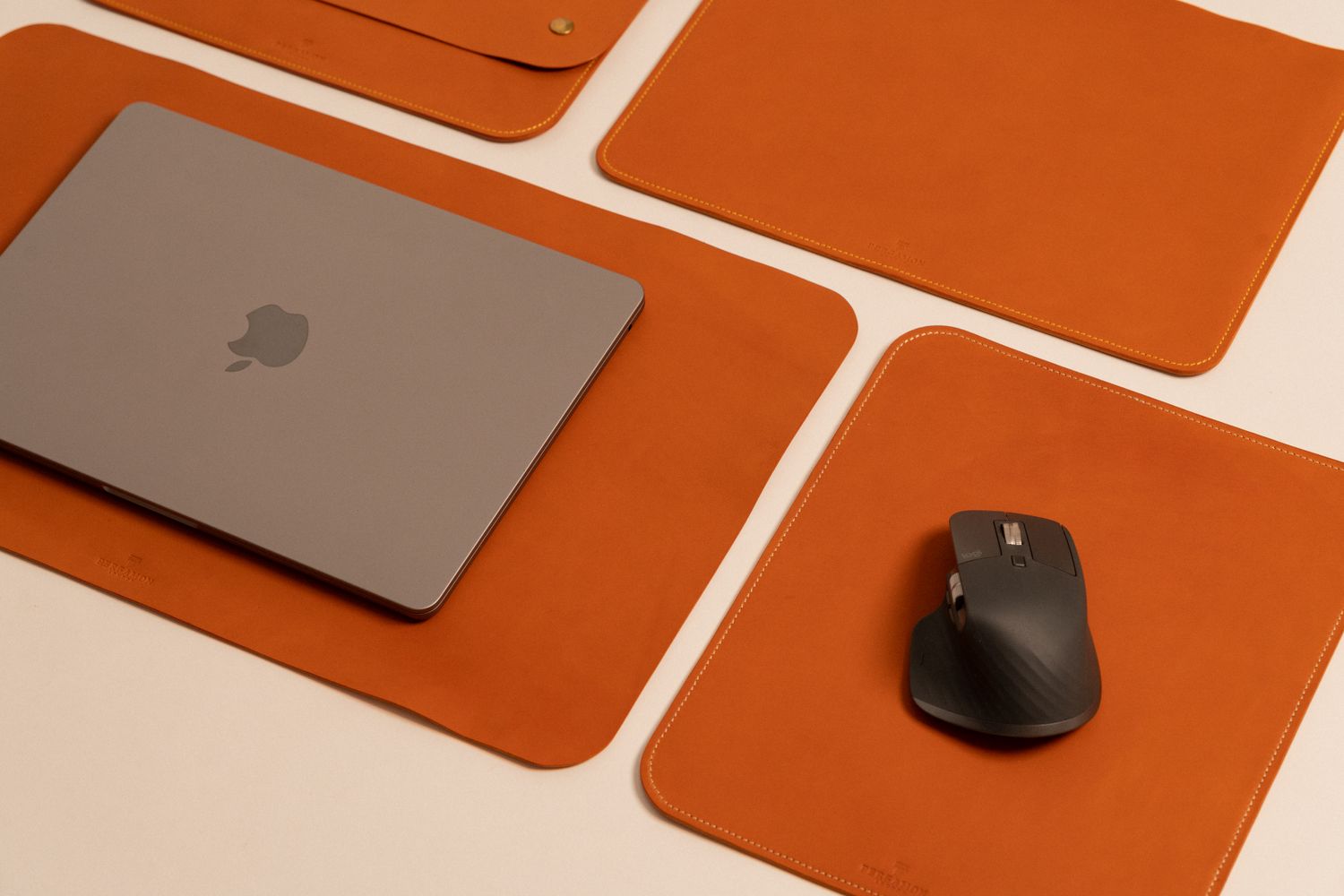
Mouse pads for different surfaces
A mouse pad creates a repeatable surface, but the best size and texture depend on how far you move the mouse and what sits around it. Begin with the desk problem you want to solve.
Separate tracking from comfort
If the pointer skips, first clean the mouse according to its instructions and try a known suitable surface. Check the manufacturer's guidance for the sensor and desk material. A pad may provide a more consistent working area, but it will not correct every connection or software problem. Identify whether the issue is pointer behavior, friction or simply an uncomfortable desk edge.
For an ordinary office task, move the pointer between the areas you use most and observe the space required. Mark that movement with a sheet of paper. A pad should accommodate the normal range without constant lifting and repositioning, while leaving room for the keyboard and nearby objects. The largest available size is not automatically the most useful.
Compare surface and edge together
A fabric surface, rigid top and coated surface feel different under the same mouse. If possible, try the actual mouse rather than rubbing the pad with a fingertip. Look for a balance that lets you start and stop movements without excessive effort. Preferences vary, and a description such as speed or control is not a universal measure.
Inspect the edge where your hand passes. Raised stitching can be durable yet noticeable against the forearm; a thick pad can create a step above the desk. Check whether the mouse feet catch near the border during ordinary movement. A thin pad may sit more discreetly but should still remain flat and stable on the intended surface.
Turn the pad over and inspect the base. It should suit the desk finish without leaving a difficult residue or sliding during use. Follow any care or surface warnings. On a delicate finish, test cautiously rather than assuming that every rubber-like backing is compatible with every varnish or coating.
Plan cleaning and replacement
Read the cleaning method before choosing a light color or heavily textured surface. Washability is a product-specific claim; a fabric top does not automatically mean the whole pad can be machine washed. Let a cleaned pad dry as instructed before replacing it on furniture. Trapped moisture underneath is an avoidable complication.
Keep crumbs and grit out of the movement area and clean the mouse feet as directed. If a pad curls, separates or becomes uneven, reassess it rather than compensating with extra pressure. A small, well-fitting surface that stays flat and is easy to clean can be more useful than an oversized decorative pad that competes with everything else on the desk.