Pan lids and universal fits
A lid described as universal still has a defined range and a particular rim shape. Match it to the actual pan before expecting it to sit securely or control the opening in the intended way.
Measure where the lid rests
Check the pan manufacturer's lid size and compare the receiving edge, not only an approximate outside diameter. A flared rim, pouring spout or unusual profile can change the fit. If the original lid is available, record its model information. Two pans labeled with the same nominal diameter do not automatically accept every lid sold under that measurement.
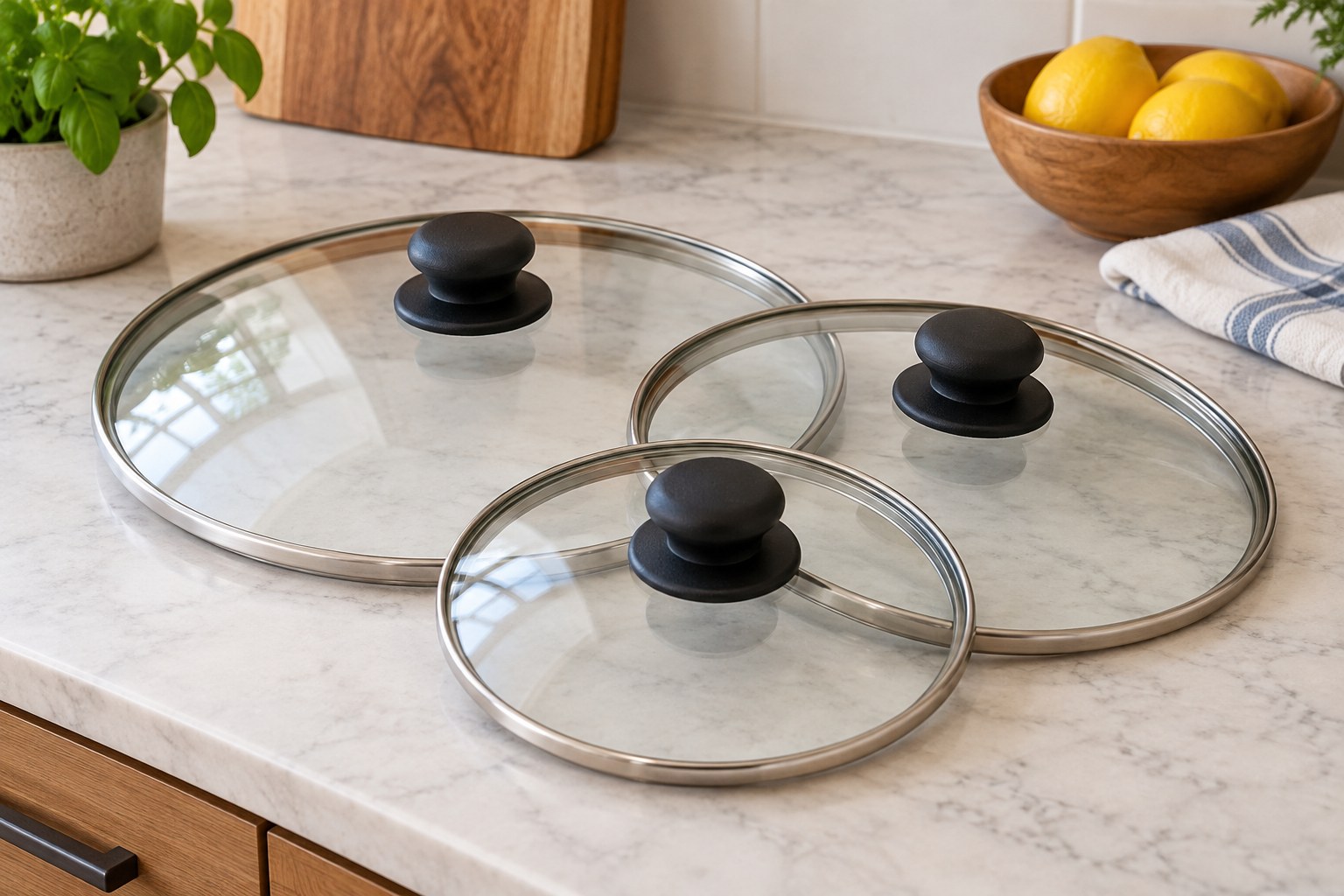
Stepped universal lids use several contact rings. Check which ring is intended to meet the pan and whether the lid sits evenly without rocking. The unused rings should not interfere with handles or a spout. Do not force a flexible edge into a position that the instructions do not describe. A lid should be chosen for supported use, not made to fit by pressure.
Read temperature and appliance limits
The lid body, knob, rim and any seal may have different limitations. Confirm the complete product's permitted temperatures and whether it is suitable for oven use. A glass appearance or metal knob is not enough to establish those permissions. Follow the maker's guidance on temperature changes, cleaning and handling rather than transferring instructions from another lid.
Vent openings affect the way the lid is intended to work. Keep them clear and do not block them to imitate a different type of cookware. An ordinary replacement lid does not turn a pan into a pressure cooker. If a recipe requires a particular covered cooking method, use equipment appropriate to that method rather than relying on a vague universal-fit description.
Check the handle and storage
The knob or handle should be reachable with the protection appropriate to the cookware. Compare its height with the oven space or cupboard where the lid will go. A flat-looking lid can still be awkward to store because of a projecting handle. If the handle loosens, follow the product's maintenance instructions instead of continuing to lift the lid by an insecure part.
Inspect the edge and body for damage during cleaning. Replace a damaged lid according to the manufacturer's guidance and avoid mixing unidentified parts from different models. Store it where the contact rim is protected from knocks. A correctly matched simple lid is more useful than a multi-size one that never sits properly on the pan you use most.