Pen cups without lost small items
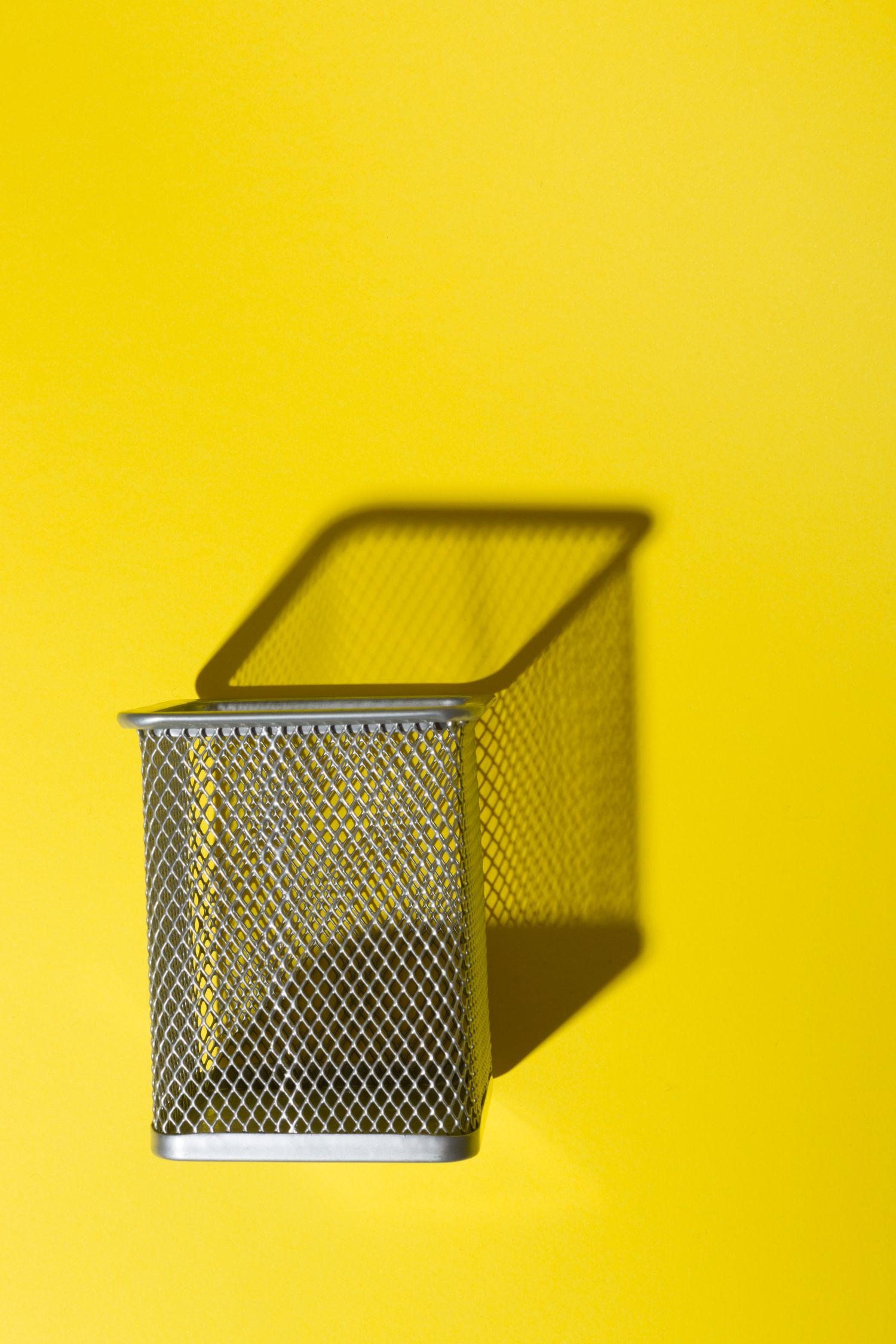
A pen cup should expose the tools you reach for, not bury small items beneath a dense bundle of markers. Its height, base and internal divisions are more useful selection criteria than the number of objects shown in a styled photograph.
Sort by length and frequency
Put the intended contents on the desk and separate long pens from short pencils, erasers, clips and other small pieces. A single deep cylinder rarely gives equal access to all of them. Keep the frequently used writing tools together and give very small items a shallow compartment or separate dish rather than letting them disappear at the bottom.
Measure the shortest pen you want to retrieve easily. Compare that length with the cup's internal height, leaving enough exposed area to grasp it. A tall holder may support long markers but conceal a short pencil. An angled opening can improve visibility from one side, so check which direction the holder will face on the actual desk.
Check stability with an uneven load
Try the holder partly filled and with the longest item on one side. A narrow lightweight base can tip when a pen catches against a neighbor. A heavier base may be steadier but should have a suitable underside for the desk finish. Do not assume a decorative metal container has protected edges or a nonmarking bottom.
Inspect internal dividers and corners. Thin channels can separate colors but may be hard to clean or too narrow for a broad highlighter. Removable sections are useful when the contents change, provided they do not lift out accidentally with a pen. Count accessible spaces rather than aiming to fill every compartment.
Keep tool care separate from display
Follow the writing-tool manufacturer's storage advice where it matters. Some pens or markers have preferred orientations; a vertical cup should not be used merely because all the colors look attractive upright. Keep caps secure and damaged or leaking tools out of the holder until they are dealt with. A cup is an organizer, not a way to prevent every kind of ink problem.
Place scissors or other pointed tools so they can be handled safely according to their design, and keep inappropriate items away from children. Avoid cramming unrelated sharp objects between pens. If a tool requires a guard or its own case, retain that protection rather than removing it to fit the display.
Lift out the contents occasionally and wipe the holder using a method suitable for its material. Return only the tools still used at the desk. A small amount of free space makes a pen easy to replace one-handed. When retrieval needs two hands and a search, reducing the contents often helps more than buying a larger cup.