Rolling drawer units and legroom
A rolling drawer unit adds storage only if it leaves enough room to sit, move and open its drawers. Compare the space around the unit with its storage capacity before sliding it beneath the desk.
Reserve the seated space first
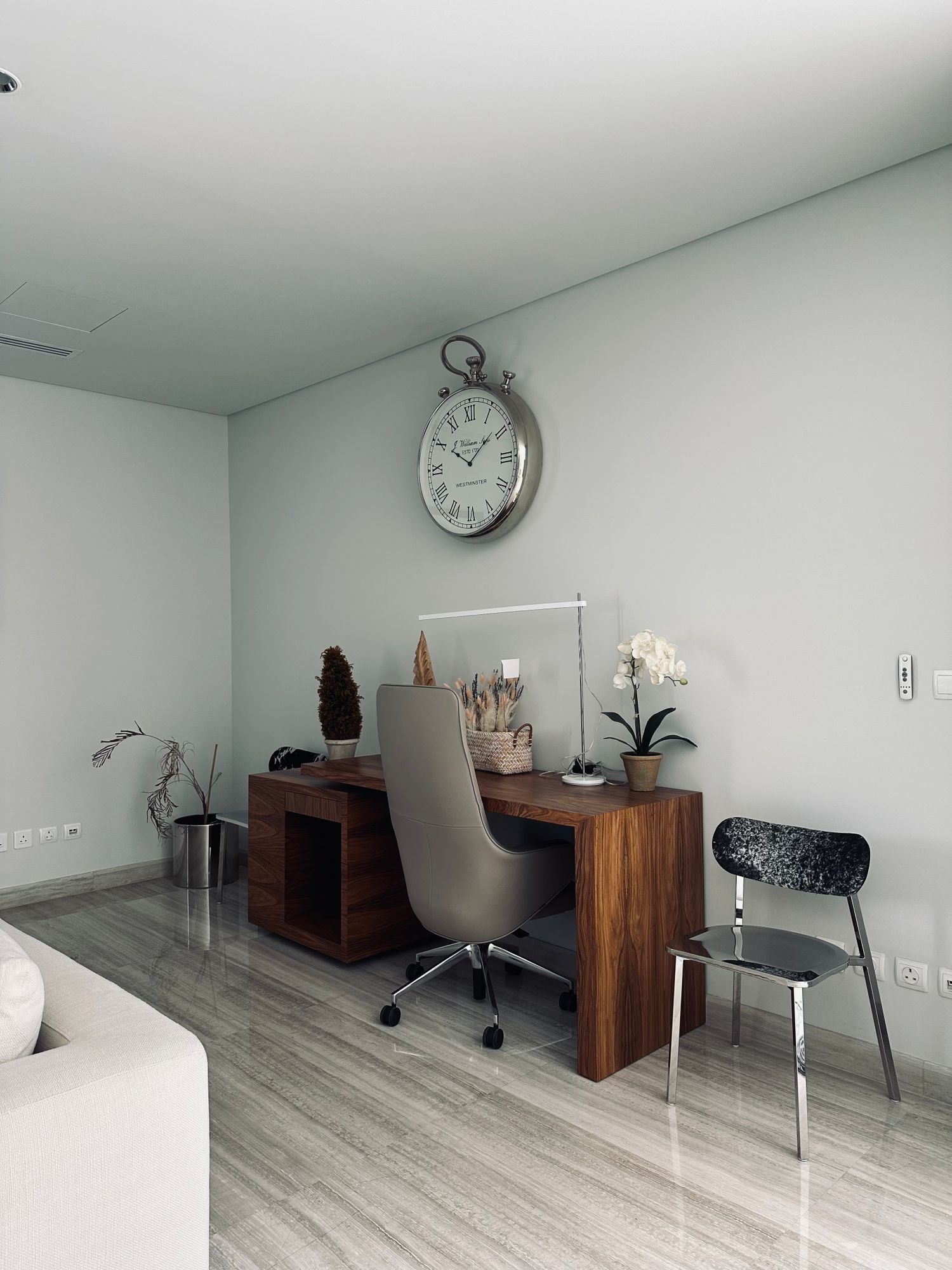
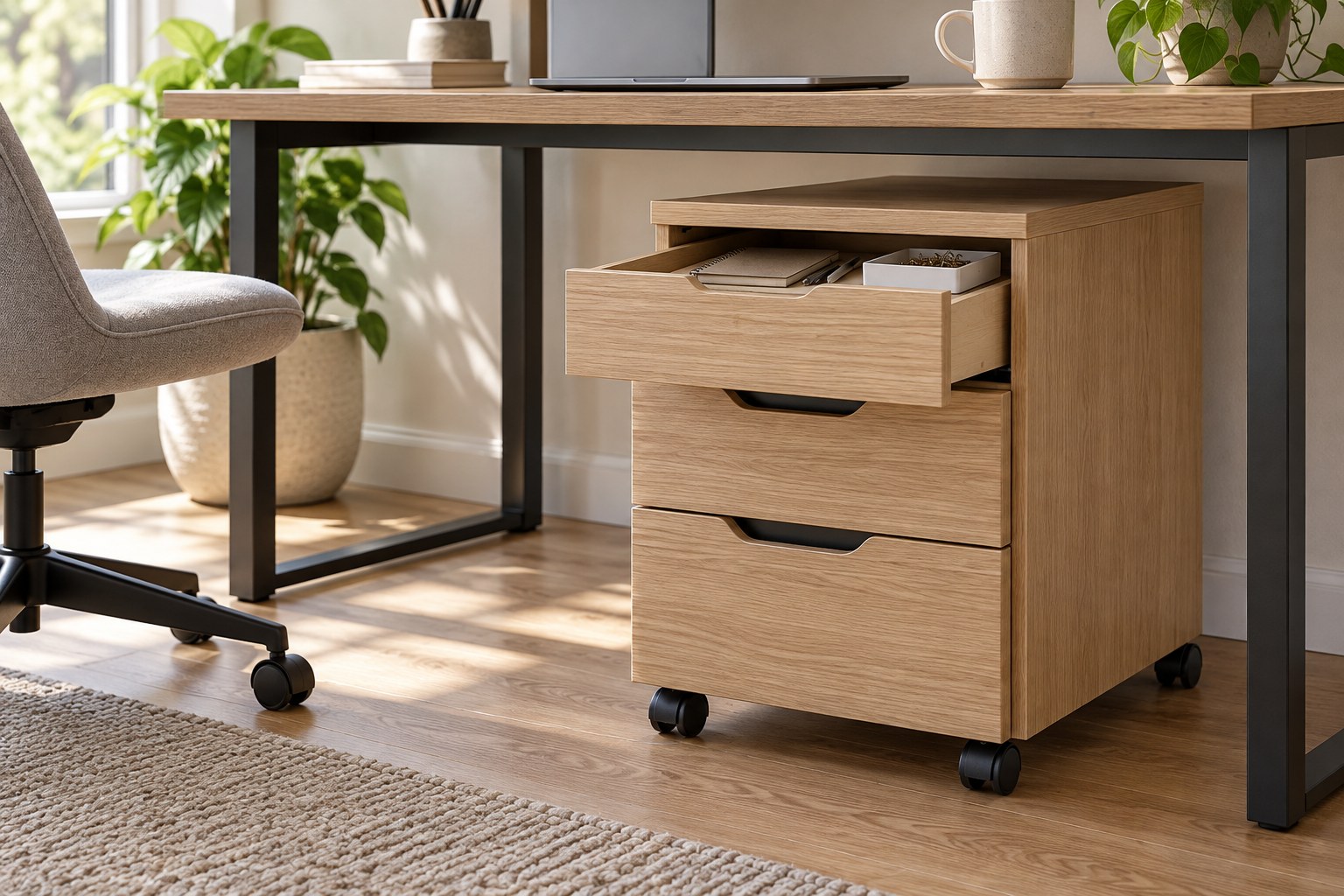
Sit at the desk in the normal working position and mark the area used by your knees, feet and chair movement. Include the path when you turn or stand up. The remaining gap is not measured only between desk legs; crossbars, chair arms and cables may reduce the usable space. Place a cardboard outline of the proposed unit before buying.
Check the unit's total height including casters and any raised top edge. Leave the clearance required by the furniture rather than choosing a unit that scrapes the underside of the desk. If it will also serve as a side table, decide whether its height and top surface suit that role without overloading it.
Open the drawers in the intended position
Measure a fully extended drawer and the room needed to stand or sit in front of it. A unit can fit neatly beneath a desk while its top drawer collides with the chair. Try accessing the lowest drawer without moving unrelated furniture. If the unit must be rolled out each time, include that movement in the routine rather than treating it as an occasional exception.
Read stability instructions, loading limits and any restriction on opening drawers together. Casters do not remove the need to follow anti-tip guidance. Use brakes or other features as directed and do not substitute extra weight on top for a prescribed stability measure. Keep heavy contents in positions permitted by the manufacturer.
Match the drawers to their contents
Measure the objects that need storage: paper, notebooks, a headset or spare supplies. External drawer fronts reveal little about internal height and the space lost to runners. A shallow divided tray can organize small items, while a deep drawer may need removable boxes to avoid a pile. Choose these inserts after the actual internal dimensions are confirmed.
Leave a little space to grasp objects and lift out a box. A drawer filled to the top may catch on the frame or make its contents difficult to identify. Keep frequently used items in the easiest drawer rather than filling every level by size alone. Storage should support the work sequence, not just absorb whatever was previously on the desk.
Check the casters on the actual floor and follow their compatibility guidance. Move the unit without using an open drawer as a handle. Clean the floor beneath it periodically and inspect the wheel area for trapped debris. A suitable unit remains easy to move when needed while preserving the legroom that makes the desk usable every day.