Cleaning brushes for narrow gaps
A narrow cleaning brush is useful only if its working end reaches the dirt without forcing a hard handle against the surrounding finish. Measure the gap and understand the surface before choosing the smallest-looking brush.
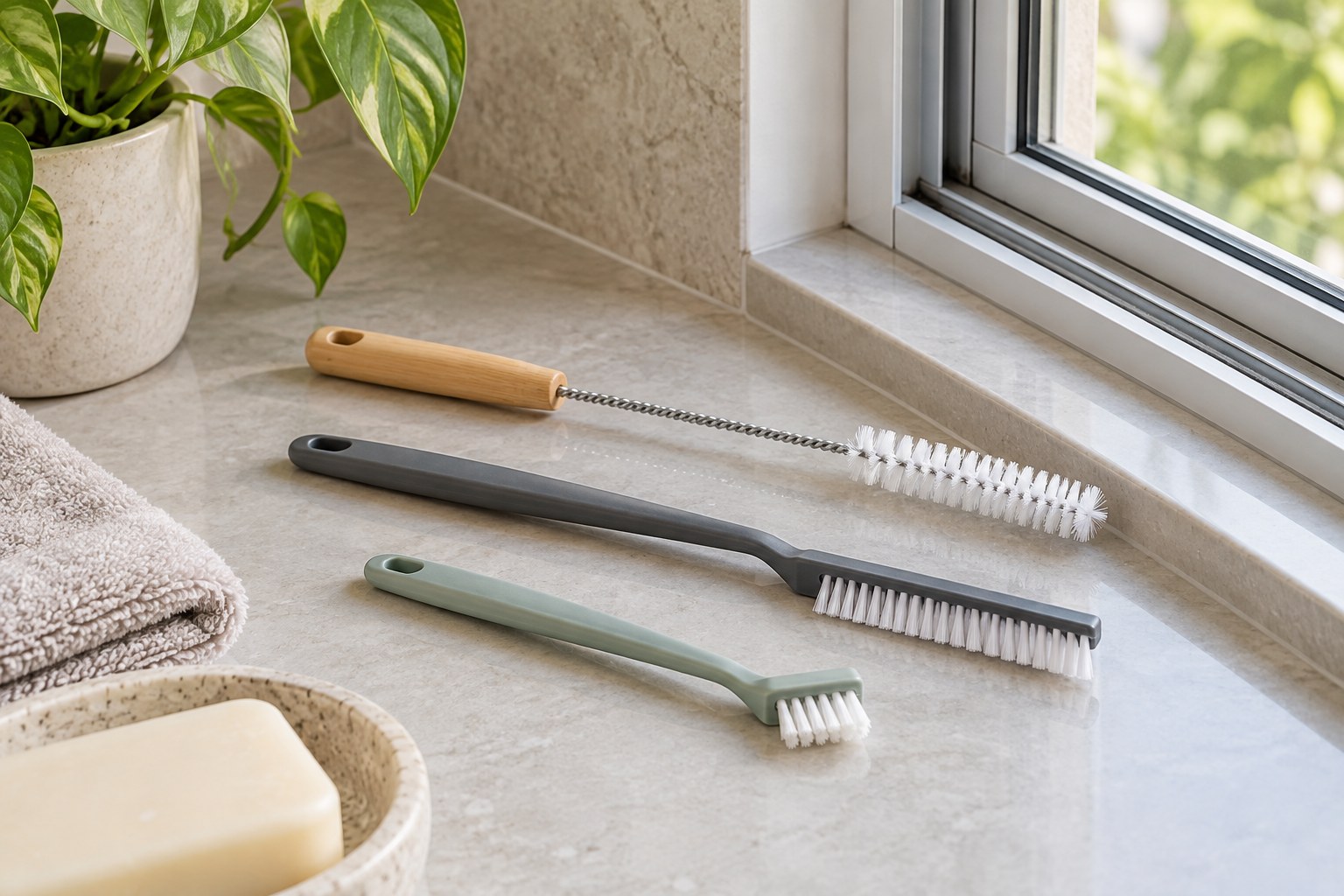
Look at the whole access path
Measure the opening and the depth of the area to be cleaned. A brush head may fit through the entrance while its handle stops before the bristles reach the back. Check bends, overhangs and nearby fittings. A photograph of a thin brush does not show whether it can turn through the actual route in a window track or appliance recess.
Determine whether the part is intended to be removed for cleaning. A removable tray or seal can be easier to clean according to its instructions than a narrow gap approached blindly. Do not dismantle equipment beyond the manufacturer's permitted maintenance steps. For electrical items, follow disconnection and cleaning requirements before introducing a tool.
Choose bristles for the surface
Compare the surface's care instructions with the brush material and stiffness. More aggressive bristles are not automatically better. A coated fitting, soft seal and hard tile joint can need different treatment. Test an inconspicuous area where appropriate and avoid using a metal tip simply because it reaches a stubborn corner.
Inspect the brush around the bristles. An exposed wire core, sharp molded seam or hard scraper edge can touch the surface when the head bends. Check the whole tool rather than the softness of the bristle tips alone. A purpose-made narrow shape is useful when it keeps unintended hard parts away from the work.
Keep dirt moving outward
Plan where loosened debris will go. Brush toward an accessible area rather than pushing it farther behind a seal or into an opening. Use only the cleaning products and moisture levels permitted for the item. A brush provides access; it does not make an incompatible chemical suitable for the surface.
Choose a handle you can control without gripping excessively or applying sideways force. Try the movement in the actual gap before scrubbing. If access remains poor, change the tool or cleaning method rather than bending the brush beyond its intended shape. Stop if the surrounding part moves or shows damage.
Rinse or clean the brush according to its own instructions and let it dry in a suitable position. Keep tools for different household areas identifiable. Replace a head when its bristles no longer hold a usable shape or expose an unwanted hard edge. A small selection of clearly assigned brushes is easier to maintain than a crowded set whose purposes are unclear.