Adhesive hooks and suitable surfaces
An adhesive hook is a small system: hook, strip, surface and load must suit one another. A large weight figure on the package cannot compensate for a weak painted layer or an unsuitable place to attach it.
Start with the surface you actually have
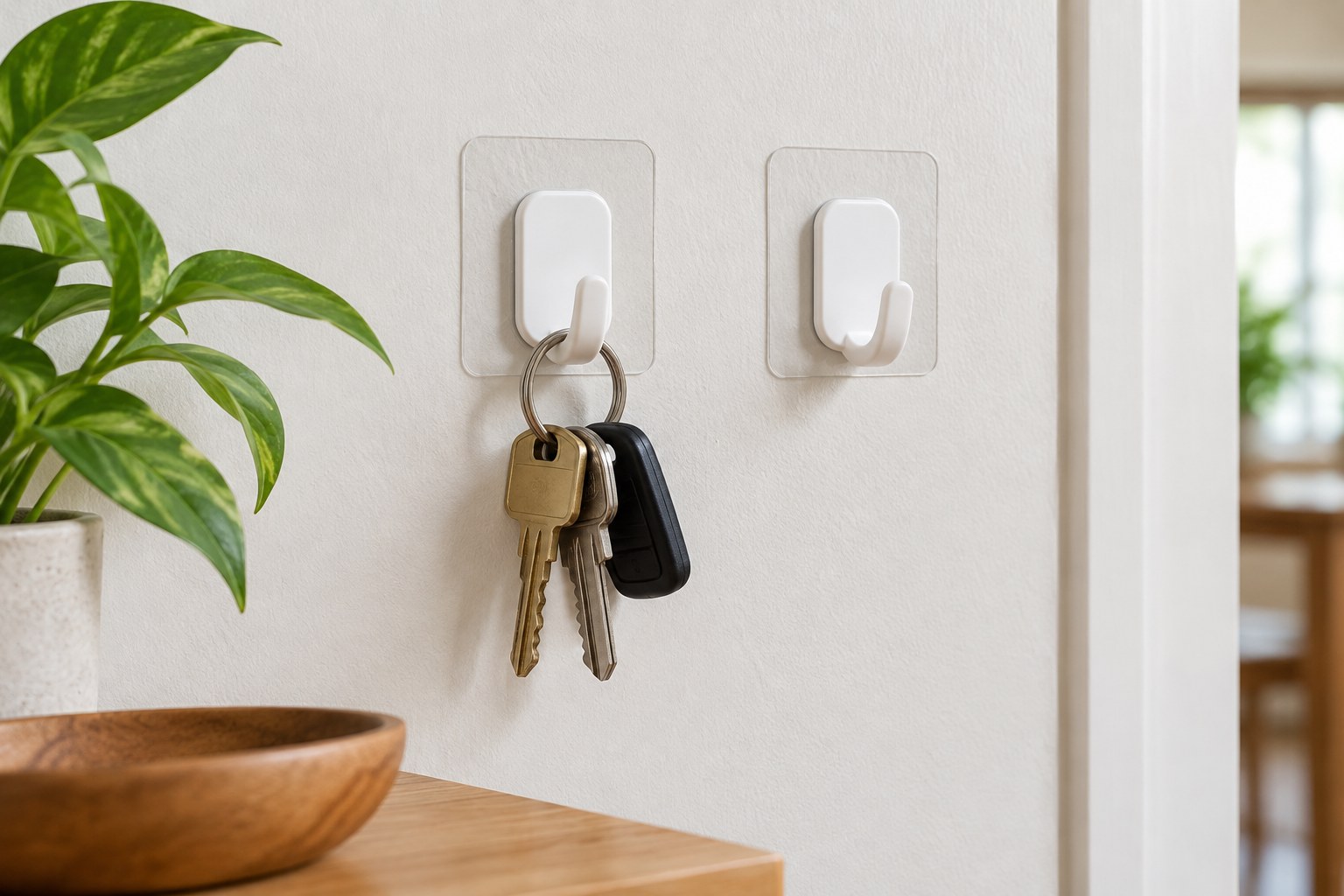
Look beyond the wall's color. Identify whether you are attaching to painted plaster, tile, glass, a coated cabinet or another finish, then check that exact surface against the product's directions. Texture, loose paint and a narrow raised border can prevent the backing from contacting the intended area. If the finish is uncertain, do not treat a removable claim as a guarantee for it.
Consider where the load will hang. A bag resting against a wall behaves differently from an item that is repeatedly pulled outward. Check that the hook opening fits the strap or loop without forcing it, and that the hanging item stays clear of neighboring doors. For temporary organization, a hook over a suitable rail may avoid adhesive altogether.
Use the instructions for that particular system
Command's instructions for its standard indoor and outdoor hooks specify surface preparation, pressure and a waiting period before loading. The steps differ between one-piece and two-piece fittings. This is a useful example of why applying an adhesive hook should not be reduced to peeling a liner and hanging something immediately.
Read the supplied directions before cleaning. Use only a preparation method compatible with both the attachment and the surface. Do not assume that a bathroom or outdoor location is covered by an ordinary indoor product. Match replacement strips by the specified type and size; a strip that physically fits behind a hook may still be the wrong component.
Write down the permitted load for the exact hook and intended orientation. Include everything that will hang there, rather than judging from an empty bag. Adding a second hook does not automatically create a reliably doubled capacity, because the load may not divide evenly. Where the item or its contents change frequently, a different type of fixing may be easier to manage.
Leave room for removal from the beginning
Some stretch-release systems need an accessible tab and space below it. Command directs users of its standard hooks to stretch the tab slowly down along the wall, rather than pulling outward. Position the hook so a shelf edge or trim will not block that action later. Keep its removal directions with spare strips.
That method is not universal for every adhesive product. Follow the instructions for the actual fixing, especially if the tab tears or the backing cannot be reached. Pulling harder on a rigid hook can transfer force directly to the finish. Stop using a hook that begins to detach; remove its load before deciding how to take the fitting down.
Plan a small, reversible arrangement
Try the location with a paper outline before using the strip. Check reach, door movement and the visibility of the hanging object. This is particularly helpful with a row of hooks, where one low fitting can obstruct another. Keep unused compatible strips in their packaging so the product family remains identifiable. A tidy collection of anonymous adhesive pieces is less useful than a small labeled supply that belongs to the hooks you own.