Clothes pegs that store dry
Clothes pegs are easier to keep usable when they return to storage clean and dry. Choose the grip for the fabrics and line you use, then choose a container that supports the drying and carrying routine.
Try the grip on ordinary laundry
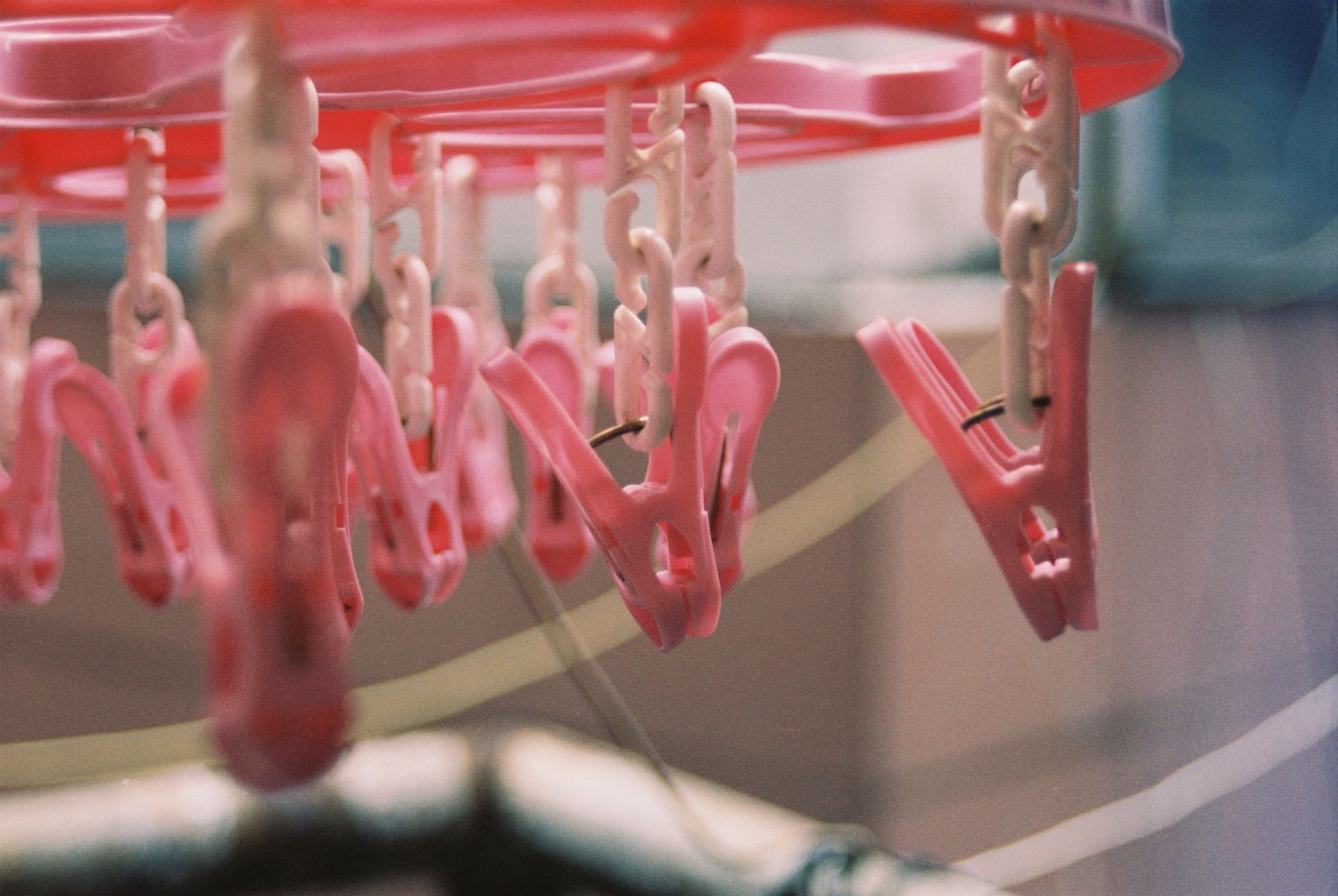
Compare the peg opening with the line or drying-rack rail and a representative folded fabric edge. A peg that grips a thin shirt may behave differently on a thick towel. Check the manufacturer's intended use and avoid forcing the jaws beyond their range. The strongest-feeling spring is not automatically the most convenient choice for every hand or garment.
Inspect the contact faces for rough edges, trapped dirt and wear. Try an inconspicuous suitable part of the fabric where appropriate. A claim about gentle grip does not remove the need to consider a delicate garment's drying instructions. Some items should be laid flat or supported differently rather than clipped onto a line.
Give wet pegs a route to dry storage
After outdoor use, inspect pegs before putting them away. Follow their material-care instructions and remove visible dirt that could transfer to clean laundry. Do not assume that a storage bag makes damp contents dry automatically. Let the pegs and container dry as directed before closing them together for a long period.
Choose a bag or basket that can be carried and opened where laundry is hung. A clip-on bag may keep pegs within reach, while a basket offers a wider opening. Check the attachment's supported use and the loaded weight. A decorative hook is not necessarily intended to hold a full container from a moving drying rack.
Size the container for access
Count the pegs used for a normal load and leave room to reach the bottom. A container filled tightly to its stated capacity can be inconvenient for one-handed retrieval. Brabantia's peg bags, for example, are offered in different capacities and attachment arrangements. Compare the actual opening and dimensions instead of choosing solely by a large peg count.
Keep spare or damaged pegs separate from the working supply. Replace cracked parts, loose mechanisms or surfaces that no longer grip as intended. A mixed collection is workable if its pieces remain clearly usable; there is no need to replace every peg merely to make the colors match.
Store the container where it does not collect dust from shoes or household tools. Check its own cleaning method rather than assuming a fabric bag is machine washable. A simple dry, reachable home for the pegs makes the next laundry load easier and reduces the need to inspect an entire neglected pile while wet clothes wait.