Furniture sliders and floor compatibility
Furniture sliders are selected for the floor and the intended move, not just the weight of the object. A slider designed for carpet can have a different working face from one intended for a hard floor.
Match the contact material to the floor
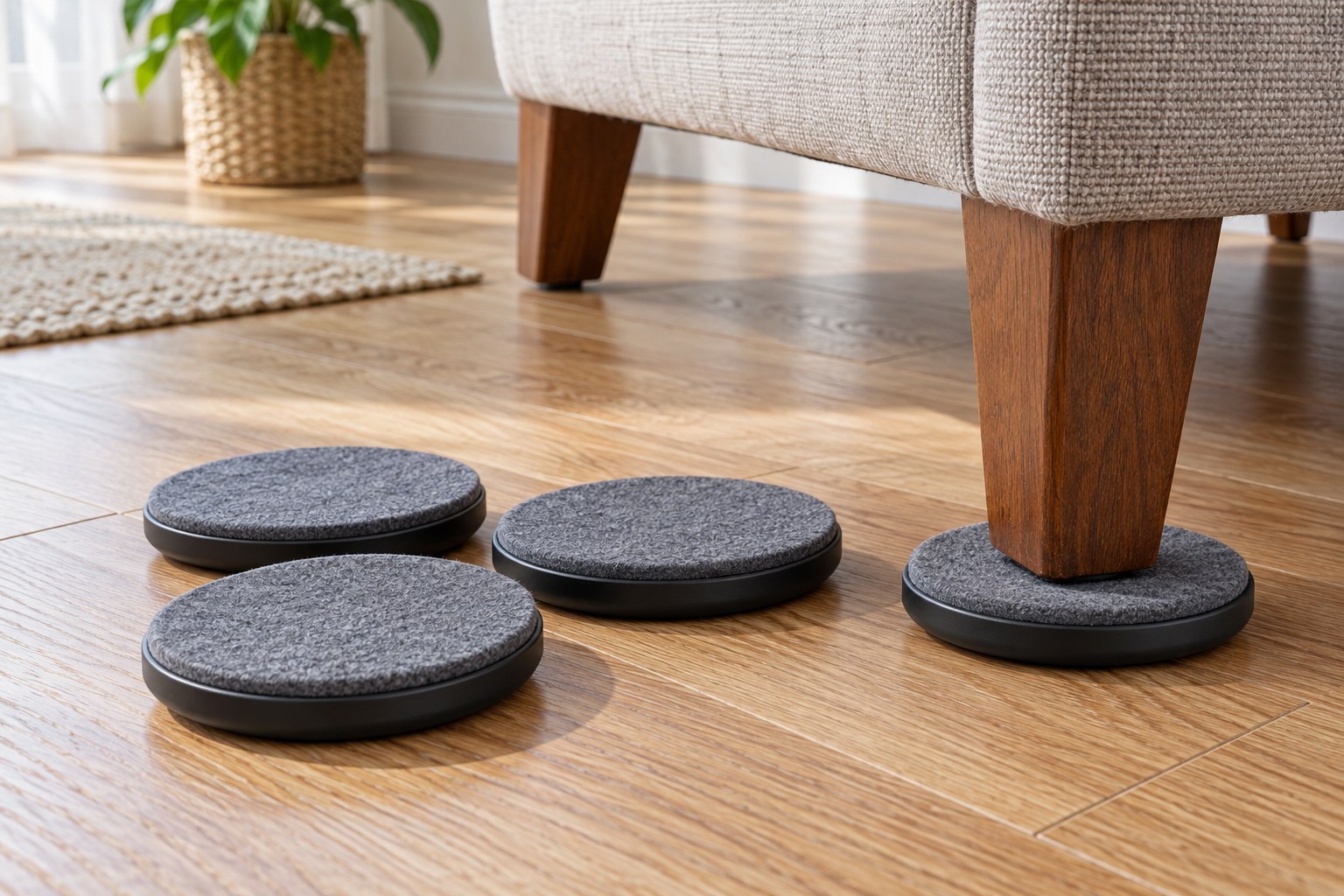
Read the floor's care requirements and the slider's explicit surface guidance. Expanded Technologies, for example, distinguishes felt versions for hard floors from plastic versions for carpet in its Slide-All range. That is a product-specific distinction to check, not permission to put any soft or hard disc under any furniture.
Inspect and clean the route before placing sliders. Grit trapped beneath a contact face can affect the floor even when the slider material is otherwise appropriate. Keep sliders previously used on dirty or rough surfaces separate until their condition has been checked. A reusable label does not mean the working face remains suitable indefinitely.
Support the actual furniture feet
Measure each foot's contact area and compare it with the slider's supported range. A small leg centered on a wide slider can behave differently from a broad cabinet base. Follow the product's placement instructions and load limits, including whether the rating applies to one slider or a complete set.
Check whether the sliders are temporary moving aids or intended to remain under furniture. Adhesive pads, reusable discs and fitted caps have different roles. A temporary accessory should not be left in place as a permanent support unless that use is approved. Keep the original furniture stability and floor-contact requirements in view.
Plan the move before lifting anything
Empty or prepare the furniture according to its instructions, clear the route and identify thresholds or changes in flooring. A slider that works on one surface may need a different arrangement after a doorway. Do not plan to push a tall or unstable item across an obstacle simply because sliders are fitted beneath it.
Placing the sliders requires the furniture to be supported safely. Use suitable help or equipment for the actual load and do not put hands under an unsupported object. Sliders reduce one part of the moving task; they do not make heavy furniture automatically safe for one person to handle. If the item cannot be controlled, change the moving plan.
Move slowly and inspect the result
Follow the permitted direction and method of movement, keeping the load stable. Stop if a slider shifts, catches or exposes a furniture foot to the floor. Do not respond by pushing harder through an unexpected resistance. Recheck the route, contact and load arrangement before continuing.
At the destination, remove or retain the sliders only as their instructions allow and restore the furniture's prescribed stability measures. Inspect the contact faces before storing reusable pieces together. Record which floor and furniture combination they suit. A small correctly identified set is more useful than a mixed box of unknown discs selected by color when the next move begins.