Garment bags for seasonal storage
A garment bag should suit the clothing's storage instructions and leave it easy to identify. Before covering a seasonal coat or suit, check the hanger, available length and condition of the garment itself.
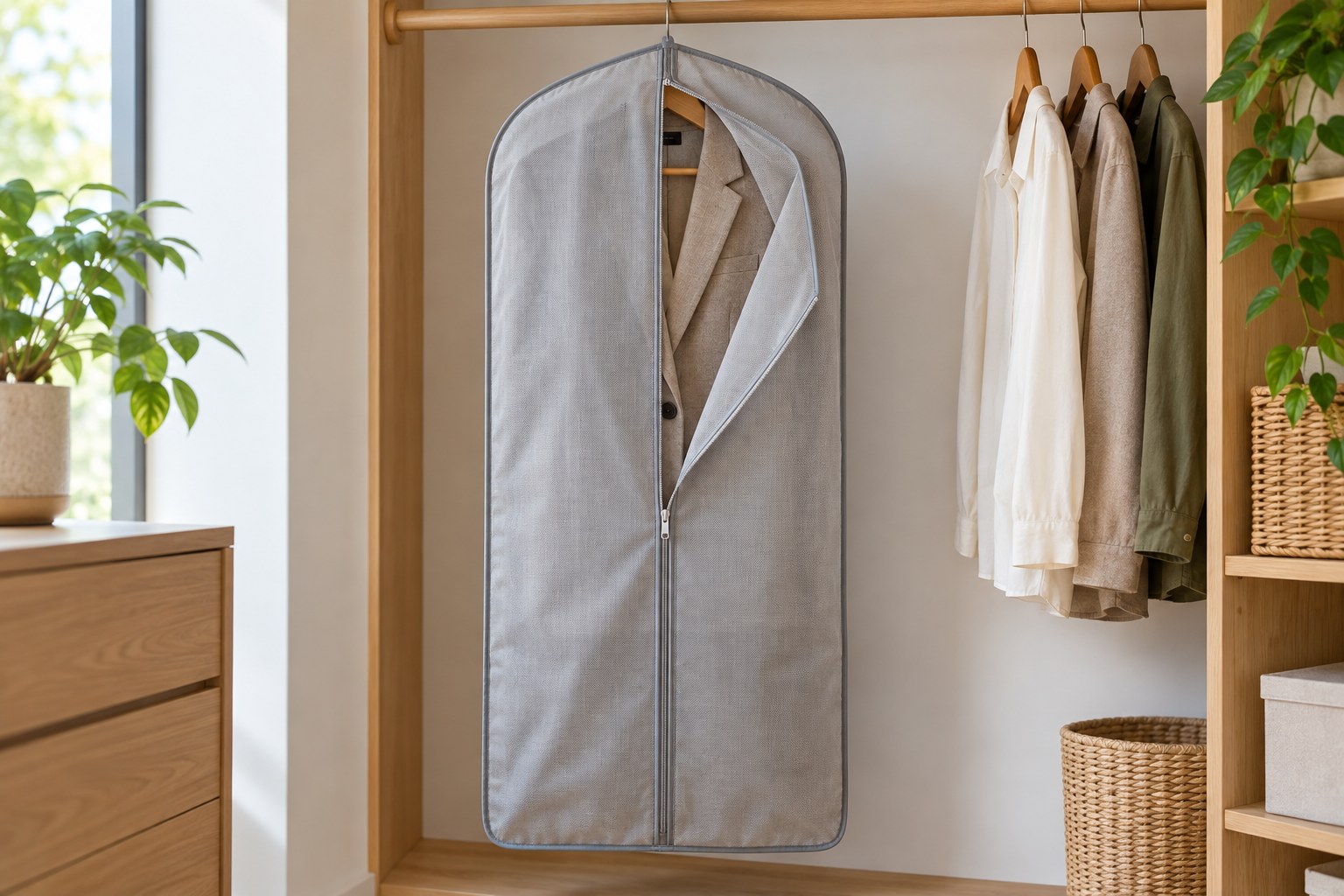
Prepare the clothing before the cover
Follow the garment's cleaning and drying instructions before putting it away for a season. A cover does not clean a worn item or solve trapped moisture. Check pockets, loose buttons and any repair needed before storage. It is easier to deal with a small problem now than to rediscover it when the garment is needed quickly.
Decide whether the item should hang at all. Some clothing needs folded storage according to its construction and care guidance. A garment bag is not a reason to hang a heavy knit or another item whose maker recommends a different method. Select the storage arrangement first and the cover second.
Measure with the hanger included
Hang the item on a suitable hanger and measure from the top of the supported garment to its hem. Include width at shoulders and any bulk from sleeves or a belt. A cover should close without forcing the garment into a narrow shape. The listed bag length may include an area that does not provide usable space below the hanger opening.
Check the bottom clearance in the wardrobe. A long bag that folds onto a shelf may crease the garment inside. If several garments share one cover, follow the intended capacity and leave enough space for access. A roomy-looking exterior does not establish that a zip will close comfortably around a full winter coat.
Choose visibility and access deliberately
A clear window or label pocket can help identify contents without opening every cover. Position a simple description where it can be read from the rail. Do not rely only on garment color when several dark coats look alike through a small window. A date or seasonal note may help if the wardrobe is reorganized regularly.
Compare the closure and hanger opening for ease of use. Check that the zipper does not catch the clothing and that the cover can be removed without pulling on delicate details. Read material and ventilation guidance for the particular storage purpose. Avoid assuming a thin transport cover is automatically the right choice for long-term storage.
Inspect stored clothing periodically and keep the wardrobe environment suitable for the garments. A bag is not a guarantee against every pest, moisture problem or accidental damage. Clean and dry the empty cover according to its instructions before reuse. The useful choice protects against the intended everyday exposure while keeping the clothing accessible and appropriately supported.