Mesh laundry bags and closures
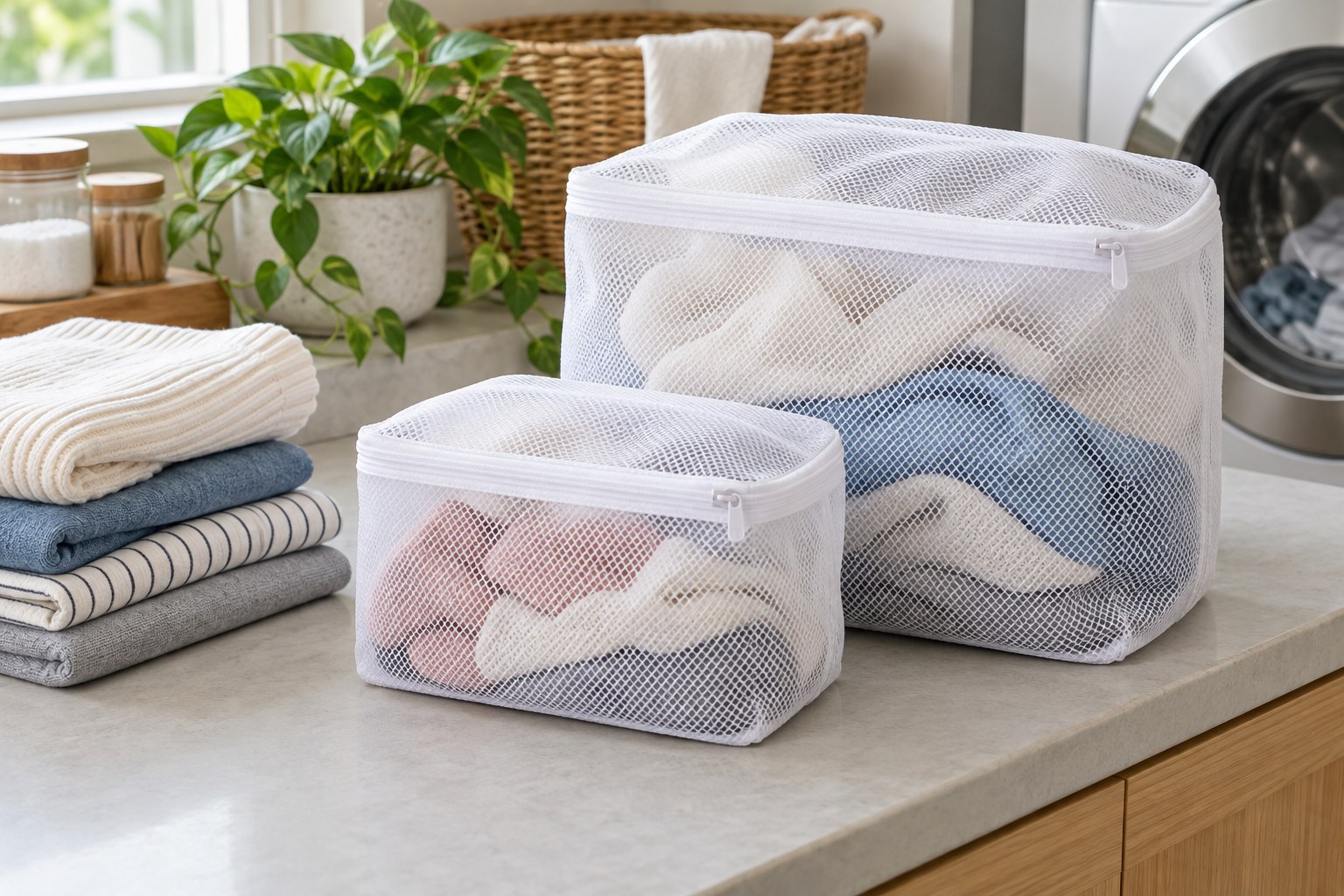
A mesh laundry bag organizes and separates selected items during an allowed wash cycle. It does not make a garment machine washable, so the garment label remains the starting point before bag size or mesh style.
Choose the load before the bag
Read the garment's care instructions and decide which items may be washed together. A mesh bag should not be used to override a hand-wash or dry-clean requirement. Separate incompatible colors, temperatures and treatments according to the clothing guidance. The bag is one part of an appropriate laundry load, not a universal protective barrier.
Compare the bag with the item in a loose state. Leave the space recommended by the bag maker so the contents are not packed into a hard bundle. A small bag may suit a few socks, while a structured item can need a different shape. Do not choose only by the number of bags in a multipack.
Inspect the closure carefully
Try opening and closing the zipper without catching the mesh. Look for a cover that holds the pull tab out of the way where the design provides one. Brabantia's wash-bag documentation, for example, describes a protective pull-tab cover. Check the feature on the actual bag rather than assuming every visible zipper has the same arrangement.
Run a hand gently around the seams and inspect loose threads or rough edges. The closure should remain shut during the intended cycle, following its instructions. A broken zipper turns the bag into an unreliable container. Replace a damaged bag rather than improvising a fastening with sharp parts that can affect other laundry.
Keep the care instructions with the system
Check the bag's own temperature and drying limits as well as the garment's. The stricter applicable requirement governs the combination. A mesh material that allows washing is not automatically suitable for every dryer cycle. If the contents need reshaping or air drying, remove them as directed after the wash rather than leaving a damp bundle in the bag.
Inspect the emptied bag for small items caught in corners, then clean and dry it according to its instructions. A hanging loop can make storage easier if it does not retain moisture in a folded pile. Keep bags with clear differences in purpose together so the right size is easy to find next time.
Evaluate the routine after a few normal loads. If a bag is always overfilled or difficult to empty, change its size or the number of items assigned to it. A useful bag fits the garment's permitted care and remains easy to close, inspect and dry; it should not introduce another unexplained step into laundry sorting.