Packing tape and manageable dispensers
A packing-tape dispenser should let you place and cut a straight strip without wrestling with the roll. For occasional household parcels, how it loads and sits in the hand can matter more than the number of rolls bundled with it.
The roll and dispenser must fit together
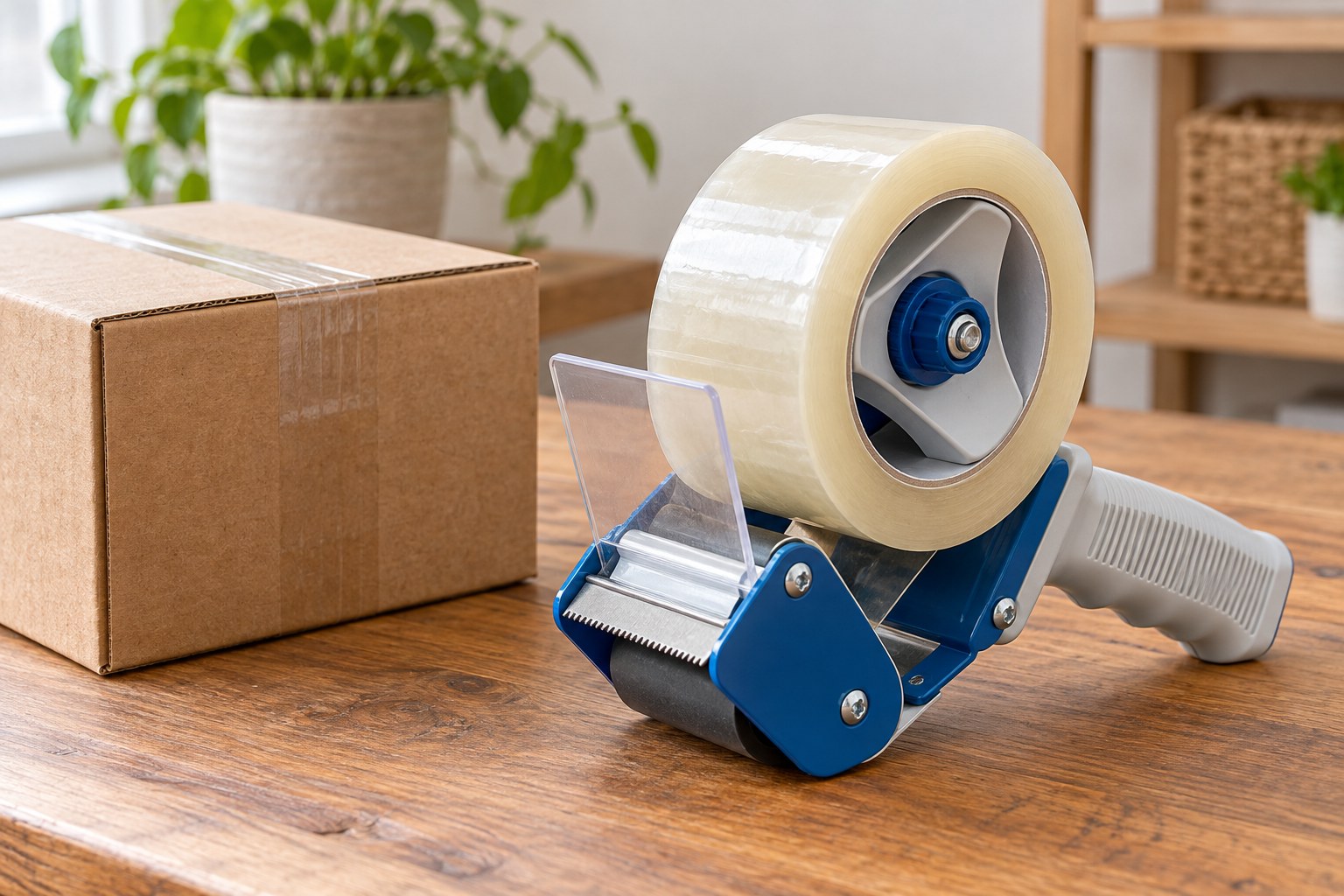
Check tape width, roll core and the largest roll diameter the dispenser accepts. These are separate measurements. A narrow roll may sit on a wide spindle without feeding neatly, while a large roll can foul the frame even if the core fits. Compare the dispenser's stated compatibility with the actual replacement tape you expect to buy.
Look at the loading route before choosing a model. The tape must pass through the intended guides with its adhesive facing the correct way. A clear diagram on the dispenser or retained packaging saves experimentation later. Keep the backing and labels from a successful roll long enough to identify the same format again.
Choose the tape for the box and job
Start with a sound box that closes without being forced. Tape is not a substitute for a carton whose flaps are torn away or whose surfaces are damp. Match the adhesive product to the packaging material and expected conditions using its maker's guidance. Follow the carrier's current packing requirements for parcels you intend to ship.
Transparent tape leaves markings visible; an opaque tape can make the seam easier to see. Neither appearance tells you the strength of the finished closure. Compare usable roll length as well as price and consider whether you can store the remainder cleanly. An oversized multipack is awkward if its rolls do not fit the dispenser already in the drawer.
Try the controls before working quickly
Some handheld dispensers have an adjustable brake or tension control. Begin with the manufacturer's setup and change it gradually if the tape does not feed as intended. Excessive resistance can make a light box move as you work. Too little control can leave an unwanted loop. Practise on a spare piece of cardboard so adjustments do not spoil a parcel label.
Pay attention to the distance between your hand and the cutter. Use any supplied guard as directed, and keep fingers away from the cutting edge when threading or clearing tape. If the end repeatedly sticks to the blade or folds back onto itself, stop and check the feed path rather than pulling harder. A compact manual holder may be more manageable than a large pistol-grip frame for very occasional use.
Keep the next start easy
Leave the tape end in the dispenser's intended holding position. Store the tool where the exposed adhesive will not collect lint and where its cutter cannot catch a hand searching through a drawer. Remove adhesive buildup only by a method compatible with the tool and its instructions; an improvised solvent can affect plastic parts.
Before closing the next box, clear dust and loose packaging from the work surface and arrange enough space to turn the parcel. A dispenser is easier to control when you are not reaching across a pile of materials. If the tool's spring, guard or cutter becomes damaged, replace the relevant serviceable part or the dispenser rather than accepting increasingly awkward handling.