Step stools and storage clearance
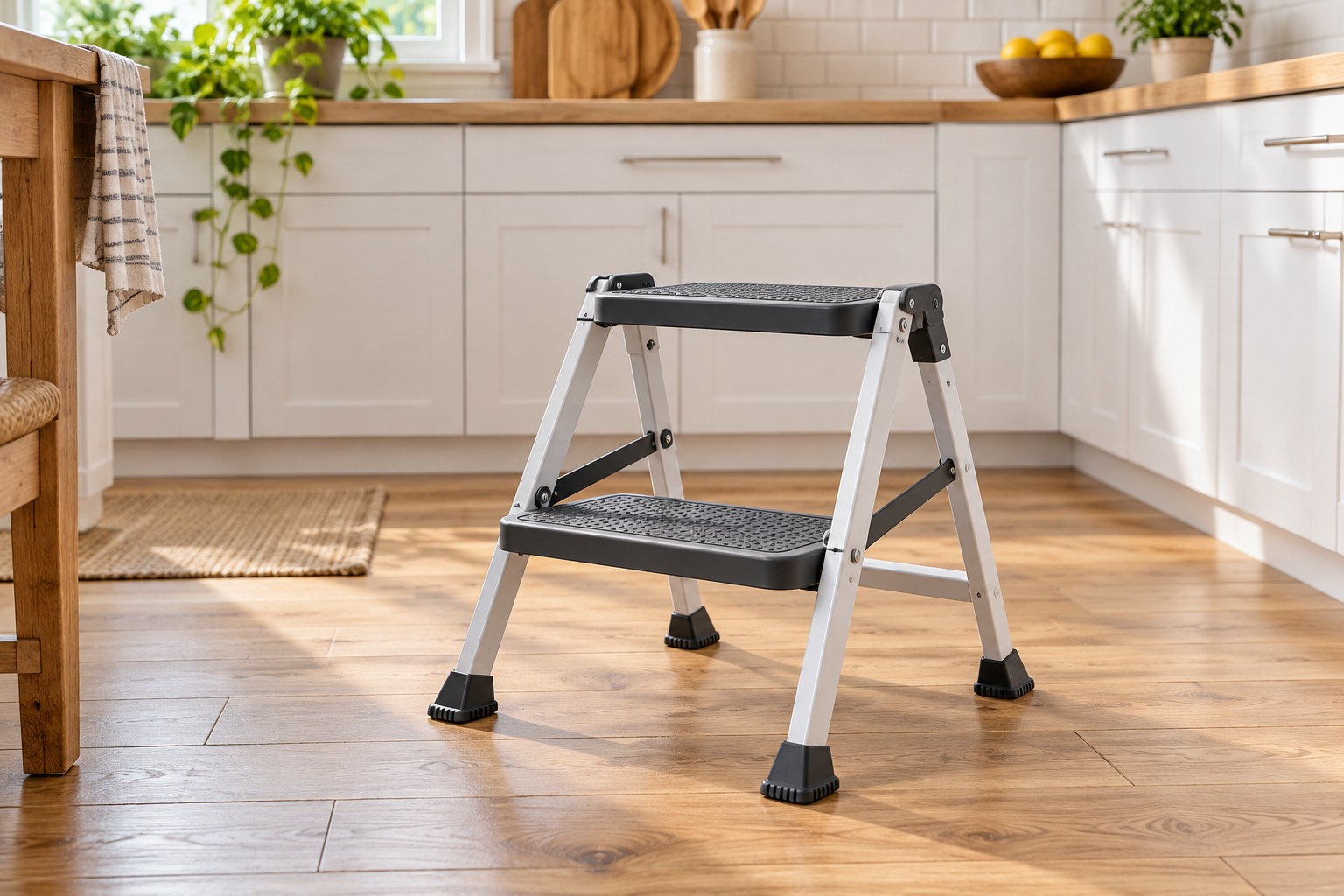
A folding step stool has two footprints: the space it occupies when stored and the larger area it needs when fully opened. Both must fit the home. A slim folded profile is not useful if the stool cannot be set up correctly beside the cupboard you want to reach.
Measure the working space before the storage gap
Start at the place where you expect to use the stool. Note cabinet doors, drawers, nearby furniture and the route used by other people. Check the product's open dimensions, not just its folded depth. A door that swings into the proposed position may make an apparently spacious corner unsuitable.
Choose a height that lets you reach the intended light task without stretching beyond the stool's permitted use. Do not select by the tallest point of the frame: standing height, overall height and advertised reach are different measurements. The permitted standing surface and any handhold must be clear in the manufacturer's instructions. If the task requires an awkward reach, rearranging the stored item may be better than buying a taller stool.
Look at the setup and standing arrangement
Read the load rating and account for the person plus anything carried. Check how the frame opens, how its locking mechanism is confirmed and where hands must stay during folding. The label should remain legible after purchase. A stool that has no usable instructions or has damaged hinges is not a bargain made acceptable by a low price.
General guidance from HSE for stepladders emphasizes firm, level support, engaged locks and avoiding overreaching. Apply the actual stool manufacturer's directions to its specific design. A rug edge, improvised packing under one foot or a partly opened frame is not a substitute for a suitable setup. Never place the stool on another object to gain height.
Consider the task as well as access. A bulky box can block your view and occupy the hands you need for support. Move heavy or awkward items to an accessible shelf rather than planning to handle them from a compact stool. For work that needs sustained force or sideways loading, choose an appropriate work method and equipment instead of treating the stool as a general platform.
Store it without damaging the mechanism
Measure the folded width and height along with depth, including protruding handles, feet and catches. Leave enough room to take it out without pulling on a hinge or scraping the wall. A dedicated upright position may be convenient if the stool is stable there as intended; follow the maker's storage guidance.
Do not use the space around the folded frame as a place to wedge other objects. Items trapped in joints can interfere with the next opening. If using a wall hanger, it needs to suit both the stool and the supporting surface. Keep the stool away from a location where someone could mistake its folded edge for a secure support.
Check it each time it comes out
Before use, examine the feet, treads, hinges and locking parts for damage, contamination or missing pieces. Open it completely according to the instructions and check its position before stepping up. Keep the route around it clear. When finished, fold it deliberately with fingers clear of moving joints.
Retain the model information for replacement parts and inspection guidance. If a foot is missing or a lock no longer works, remove the stool from use until it is appropriately repaired or replaced. Its usefulness depends on repeating a reliable setup, not merely fitting neatly back into the storage gap.