Toolboxes for a small household kit
A small household toolbox works best when its contents are easy to see and return. Buying a large case first can encourage a collection of rarely used pieces while the screwdriver needed today remains hidden at the bottom.
Lay out the tools you already use
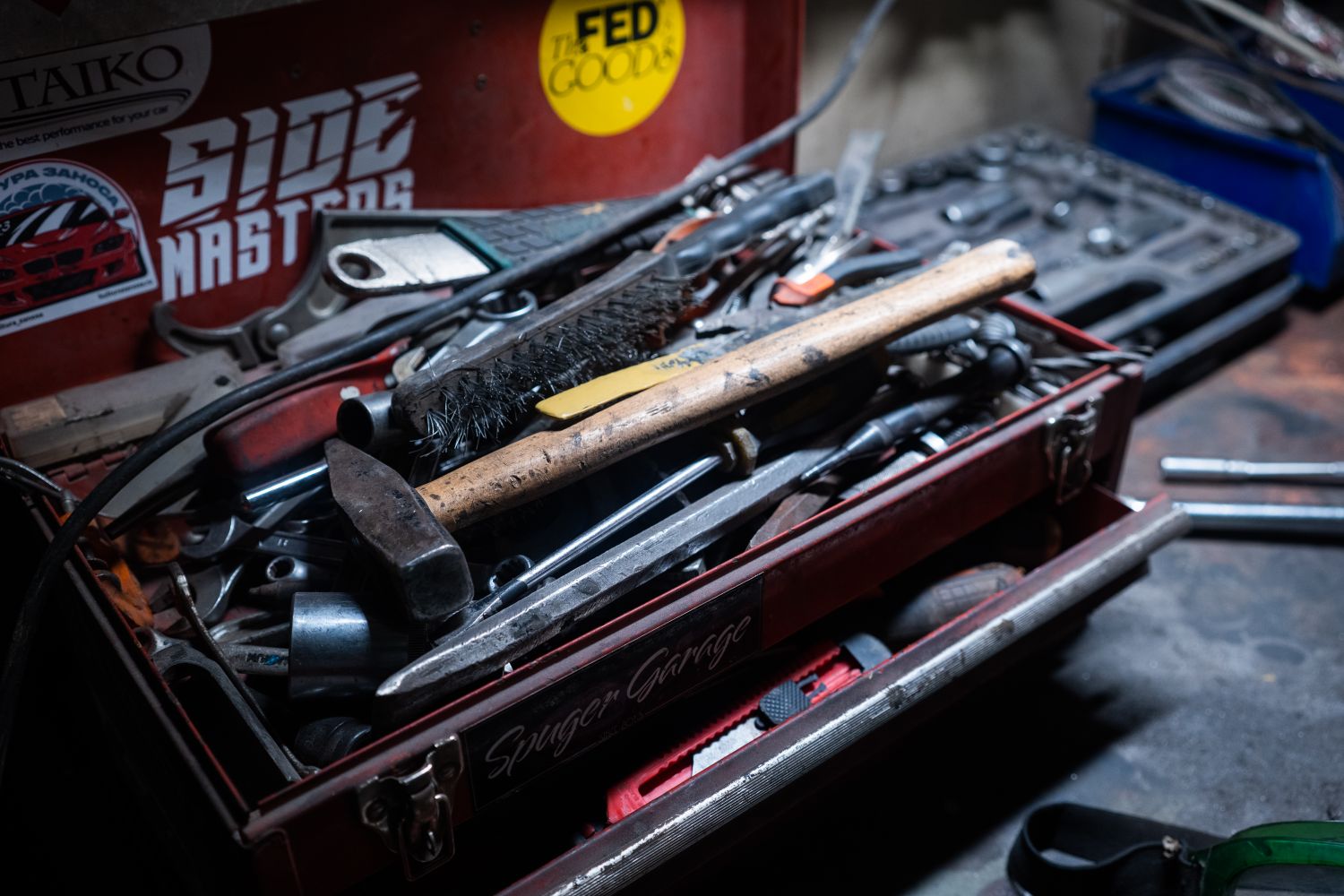
Gather the tools from drawers and cupboards and place them on a clear surface. Separate working pieces from broken tools, loose packaging and duplicate accessories. Keep any instructions needed to identify a specialist tool. Build the storage choice around this actual collection and the few missing items you have a defined use for.
Arrange the longest pieces first. A useful case dimension is the clear internal length available after hinges, dividers and handles are accounted for. The outside dimensions may describe a much larger shell. Include the space required to pick a tool up rather than packing every recess as tightly as possible.
A tray changes how the lower compartment is used
A removable tray can keep small everyday items above larger tools. Check whether it can stand securely beside the box during a job and whether its handle is comfortable when loaded. If the tray must be removed to reach almost anything, the arrangement may become two untidy piles each time you open it.
Fixed dividers can stop tools shifting but reduce flexibility. Adjustable compartments help only if their partitions stay in place during carrying. For a compact collection, a simple open compartment with a few separate small-parts containers may be easier to adapt as individual tools change.
Keep small parts identifiable
Store screws, washers and spare fittings in closed compartments with clear labels. A mixed handful is difficult to identify and can migrate into hinges or catches. Keep hardware supplied with a particular item together, along with its model name. Do not assume that visually similar screws share the same thread or suitable use.
Bits and sockets are easier to select when their sizes remain visible. If a molded holder conceals the markings, a different organizer may save repeated trial fitting. Retain protective covers for sharp edges and points. Do not let a loose blade become another anonymous object beneath the pliers.
Assess the box as something you carry
Try the handle, latches and lid movement before filling the case. The lid should stay where intended during access, and a latch should not be easily confused with a carrying grip. Check the stated capacity and remember that a large container can become uncomfortable to move long before all its space has been used.
Consider the route from storage to the usual work area. A wide box can be inconvenient in a narrow cupboard even if it fits on the shelf. A soft tool bag may open more easily in some spaces, while a rigid case can provide a defined stackable shape. Compare those handling differences rather than treating one construction as universally superior.
Leave a little room for maintenance
Return tools clean and dry according to their own care instructions. Remove loose debris from the empty case periodically and examine catches, hinges and internal pockets. Keep chemicals, leaking containers and loose batteries out of a general mixed-tool compartment unless it is specifically designed for them.
An inventory photograph can help you remember which fitted spaces belong to which items. It need not become a complicated tracking system. The useful routine is simply to notice a missing tool before the next task, replace damaged storage parts and keep the box light enough that you will actually bring it to the job.